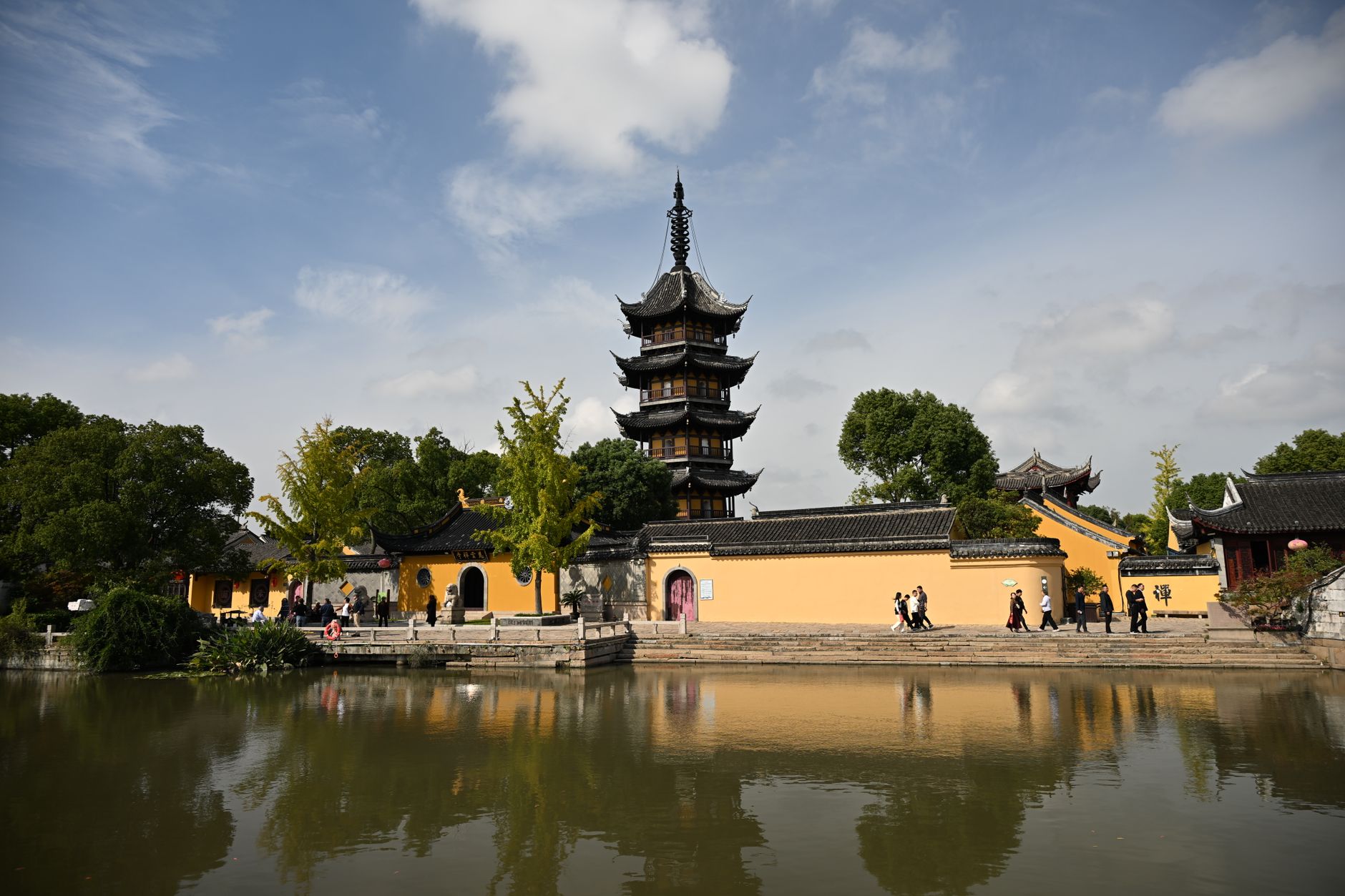
Tang-dynasty Buddhist temple immortalized in the 8th-century poem ‘A Night Mooring by Maple Bridge’ — the bell sound from this temple is the most famous in Chinese poetry.
At a glance
- What it is
- Heritage Site
- Also known as
- 寒山寺 (Hánshān Sì)
- Opening hours
- 7:30 AM – 5 PM
- Time needed
- 1 hour
- Best time to visit
- Quick visit; New Year’s Eve for traditional bell ceremony
- Getting there
- Taxi / DiDi from metro
- English
- Some English signage
- Cards accepted
- Cash only
- Entry
- Walk-in — no booking
- Wi-Fi
- Free Wi-Fi
- Address
- 24 Hanshan Temple Lane, Gusu District, Suzhou · 苏州市姑苏区寒山寺弄24号
Hanshan Temple (Cold Mountain) map & getting there
Taxi / DiDi? Show the driver: 苏州市姑苏区寒山寺弄24号 · 24 Hanshan Temple Lane, Gusu District, Suzhou
Hanshan Temple is a 1,500-year-old Buddhist temple in western Suzhou, founded around 502 AD. It’s named after the 7th-century Tang-dynasty Chan (Zen) monk Hanshan (‘Cold Mountain’) who lived here. The temple became eternally famous via Zhang Ji’s 8th-century poem ‘A Night Mooring by Maple Bridge’ (枫桥夜泊) — every Chinese student learns the poem in middle school, and the line ‘the midnight bell from Hanshan Temple reaches my passenger boat’ (夜半钟声到客船) made Hanshan’s bell the most evocative sound in classical Chinese poetry. The temple has rebuilt the original bell multiple times (the current bell dates from 1906, with a 2008 replica also in use). Foreigners visit primarily for the poetry connection — the temple architecture is standard rebuilt-Qing-style, not architecturally outstanding. Entry ¥20. Open New Year’s Eve for the traditional 108-bell-strike ceremony at midnight.
Highlights
- Tang poetry connectionZhang Ji’s ‘A Night Mooring by Maple Bridge’ (枫桥夜泊)
- Maple BridgeThe ‘Maple Bridge’ from the poem, 200m from the temple
- New Year’s Eve 108-bell ceremonyTraditional midnight bell-striking, draws 50K+ visitors
What Chinese travelers actually do here
Distilled from Chinese-language travel notes — the practical tips most English guides miss.
- Zhang Ji’s poem (28 Chinese characters total) is short enough to memorize: ‘月落乌啼霜满天 / 江枫渔火对愁眠 / 姑苏城外寒山寺 / 夜半钟声到客船’. Translation: ‘Moon sets, crows cry, frost fills the sky / Maple river fishermen sleep restless / Outside Gusu city, Hanshan Temple / The midnight bell strikes my passenger boat.’ Reading this changes the visit entirely.
- Most foreigners walk in, see the temple, walk out unimpressed in 30 minutes. The temple REWARDS 60-90 min slow viewing IF you’ve prepared with the poem context. Without preparation, it really is just another rebuilt temple.
- The current bell dates from 1906 (replacing earlier bells lost to wars). A 2008 replica is also displayed. Foreigners can pay ¥10 to strike the bell themselves — this is the ‘tourist version’ of the New Year’s Eve ceremony. Strike once, listen to the deep tone, contemplate.
- The temple’s Chan (Zen) Buddhist heritage connects to the 7th-century monks Hanshan (‘Cold Mountain’) and Shide, whose poems influenced Beat Generation American writers like Gary Snyder and Jack Kerouac. Hanshan’s collected poems are translated into English as ‘Cold Mountain Poems’.
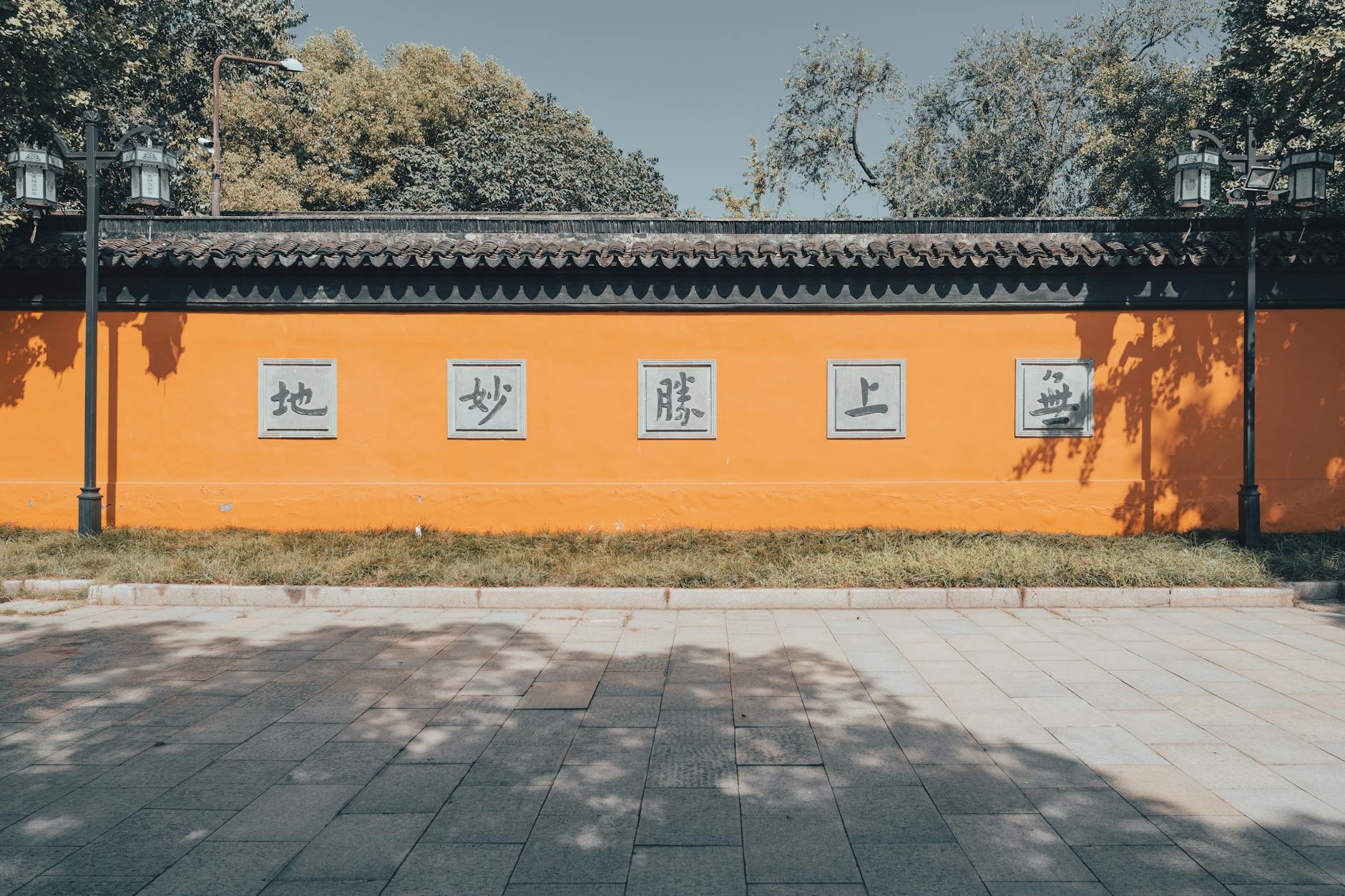
- Calligraphy buffs visit specifically for the stone-tablet inscriptions inside the temple courtyards — multiple Tang + Song-era calligraphers have inscribed versions of Zhang Ji’s poem on the temple walls. The Mi Fu (1051-1107) inscription is the most-photographed.
- Avoid Saturday afternoons (Chinese tourist groups + local families) — weekday mornings (Tue-Thu 8-10 AM) have 60% fewer visitors.
Photos
Videos


Frequently asked questions about Hanshan Temple (Cold Mountain)
- Why is Hanshan Temple famous?
- Tang poet Zhang Ji wrote ‘A Night Mooring by Maple Bridge’ (枫桥夜泊) in the 8th century, ending with the line ‘the midnight bell from Hanshan Temple reaches my passenger boat’ (夜半钟声到客船). Every Chinese student memorizes the poem in middle school — making Hanshan’s bell the most evocative single sound in 1,200 years of classical Chinese poetry. Foreigners typically visit for the poetic association, not for the architecture (the temple has been rebuilt many times).
- Is the temple architecturally impressive?
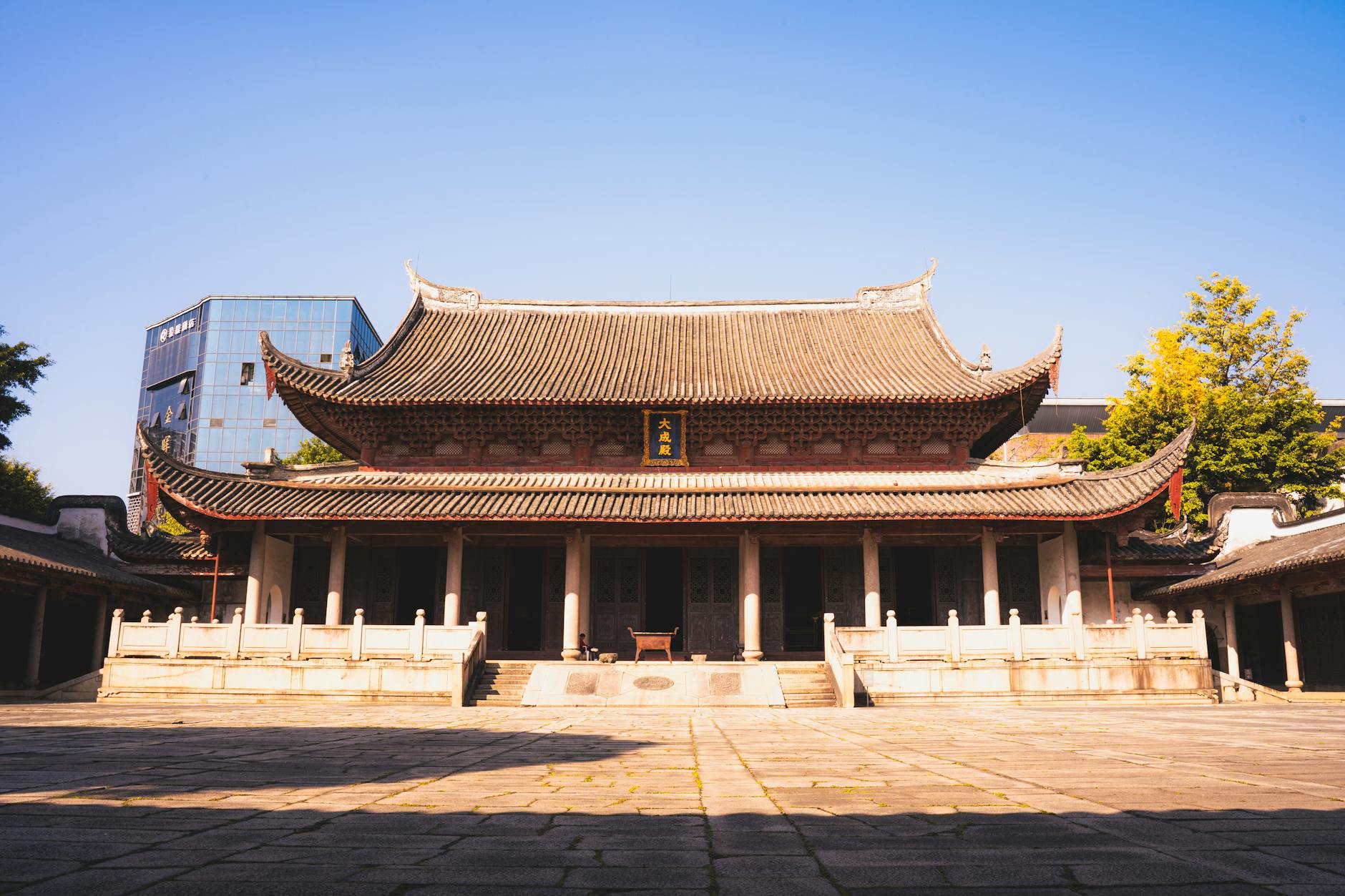
- Honestly, no — current buildings are Qing-Republican rebuilds (most structures date to 1900s reconstructions). If you’ve seen any major Chinese Buddhist temple (e.g., Shanghai’s Jing’an Temple, Beijing’s Yonghe Temple), Hanshan won’t surprise you architecturally. The poetic + cultural association is the entire draw.
- Should I visit on New Year’s Eve for the bell ceremony?
- Only if you’re already in Suzhou for New Year’s. The 108-bell-strike ceremony (midnight, December 31 → January 1) draws 50,000+ visitors — crowds are brutal, advance booking required, hotel prices triple, and the actual experience involves 4-5 hours of waiting for 108 brief bell strikes. Worth it for cultural-immersion enthusiasts; skip if you value quiet contemplation.
- Where’s the Maple Bridge (枫桥)?
- 200m southwest of the temple — a small stone arch bridge over the canal. NOT particularly impressive architecturally (it’s a modest Song-era bridge), but the historical-poetic association makes it photogenic at dusk. Read Zhang Ji’s poem (4 lines, 28 characters) BEFORE visiting; the bridge gains meaning once you know the lines.
- How does Hanshan Temple fit a Suzhou itinerary?
- Quick visit (60-90 min), best combined with adjacent attractions. Standard route: Pan Gate or Shantang western end morning → Hanshan Temple + Maple Bridge midday → return to central Suzhou for afternoon. Don’t make a special trip just for Hanshan Temple unless poetry is your core interest.
More in Suzhou
Plan your Suzhou trip
- Hangzhou vs Suzhou — Which Day Trip Should You Take from Shanghai?Itineraries · 8 min read
- China High-Speed Rail (Gaotie) — The 2026 Foreigner’s GuideTransit · 11 min read
- Does Google Maps Work in China? (No — Here’s What Does, 2026)Internet & Apps · 9 min read
- WeChat Pay for Foreigners — The 2026 Setup GuidePayments · 9 min read
- China Trip Pre-Departure Checklist — The 30-Day TimelineVisa & Entry · 10 min read
- 240-Hour Visa-Free Transit to China — 2026 GuideVisa & Entry · 11 min read
- How to Use Alipay as a Foreigner in China — 2026 GuidePayments · 11 min read