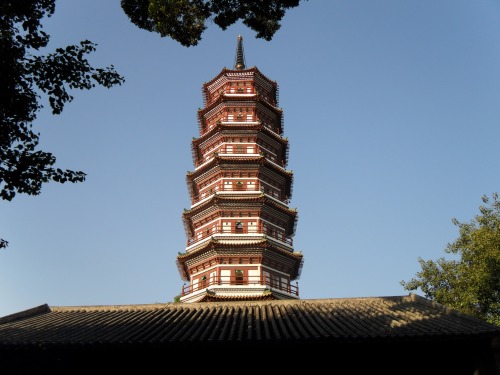
1,400-year-old Buddhist temple in downtown Guangzhou, anchored by the kaleidoscopic 9-story ‘Flower Pagoda’ first built in 537 CE.
At a glance
- What it is
- Heritage Site
- Also known as
- 六榕寺 (Liùróng Sì)
- Opening hours
- 8 AM – 5 PM
- Time needed
- 45-60 min
- Best time to visit
- Morning chanting 6:30-7:30am for atmosphere; weekday mornings less crowded
- Getting there
- Metro to the door
- English
- Little to no English
- Cards accepted
- Cash only
- Entry
- Walk-in — no booking · tickets & prices →
- Wi-Fi
- No public Wi-Fi
- Address
- 87 Liurong Rd, Yuexiu District, Guangzhou · 越秀区六榕路87号
See Liurong Temple (Six Banyan) tickets & tours
Trip.com link · we earn a small commission · disclosure
Liurong Temple (Six Banyan) map & getting there
Taxi / DiDi? Show the driver: 越秀区六榕路87号 · 87 Liurong Rd, Yuexiu District, Guangzhou
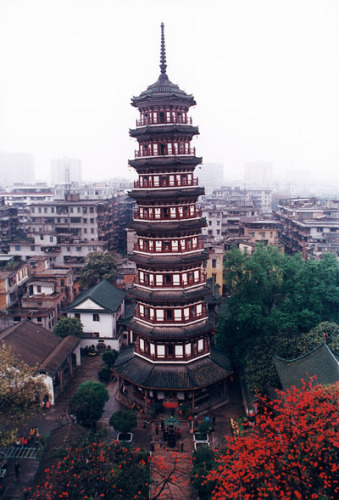
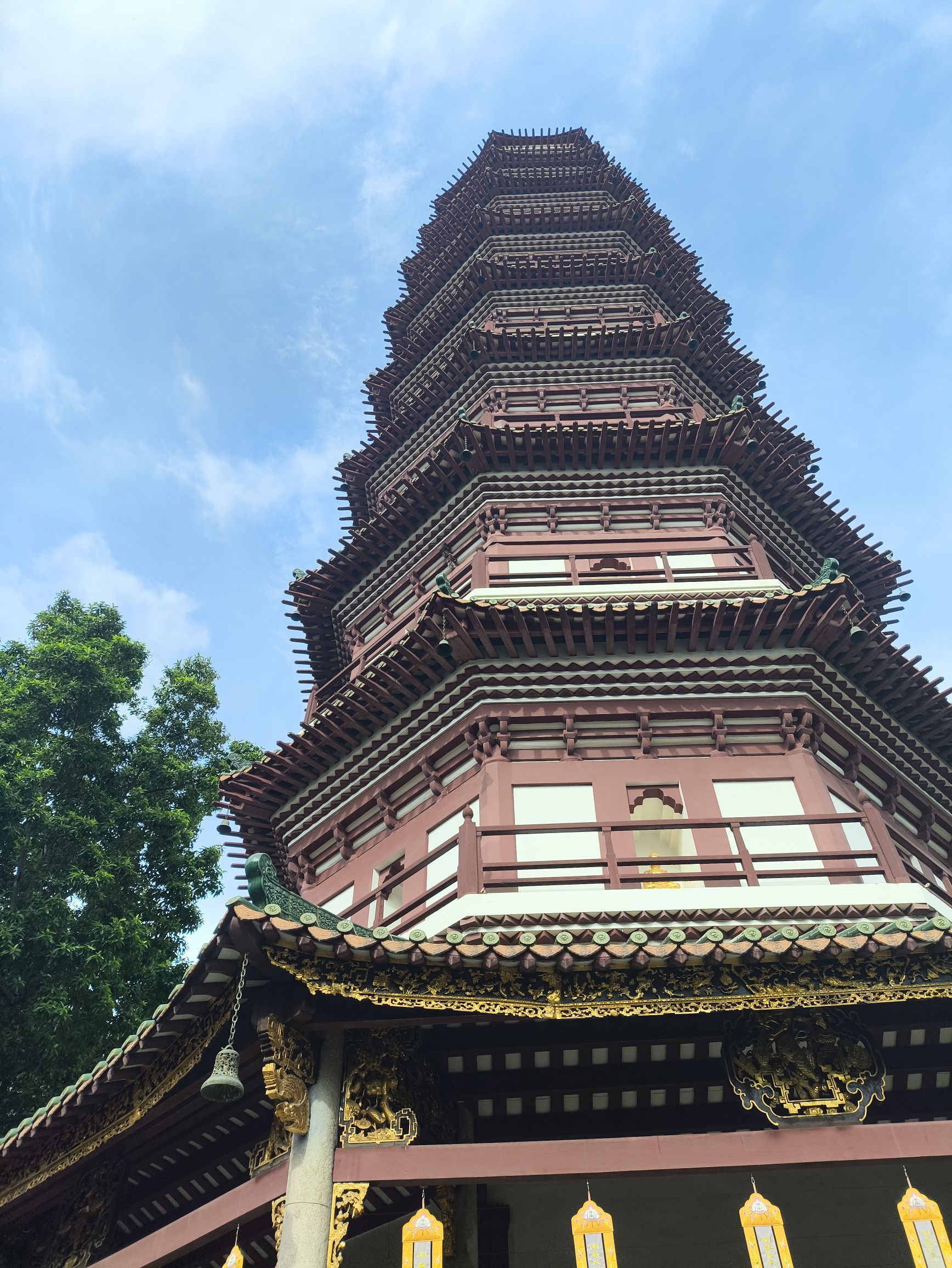
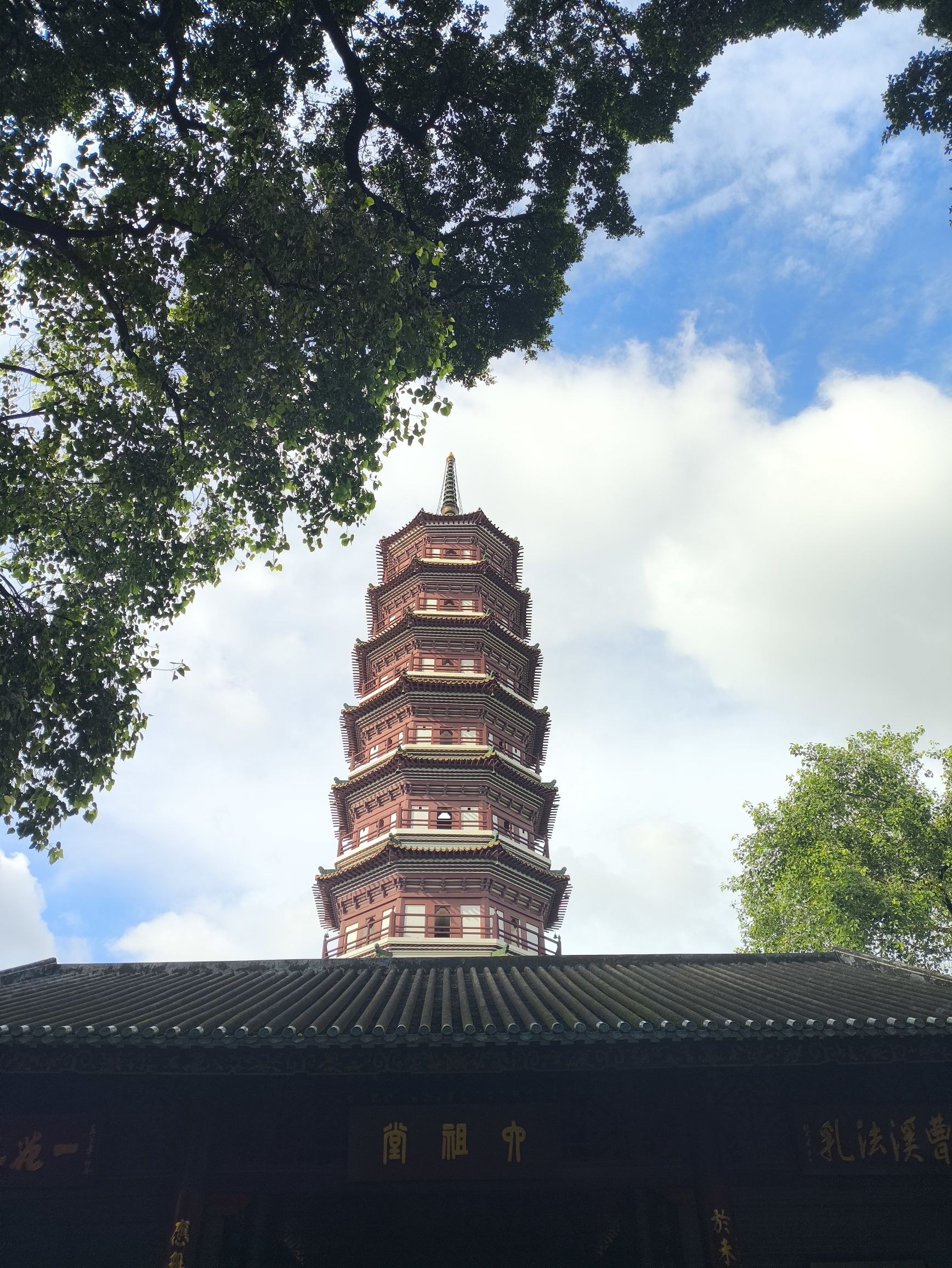
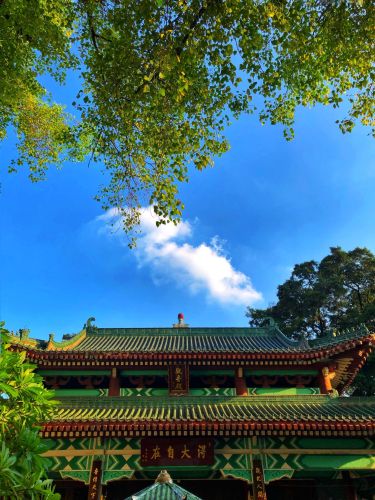
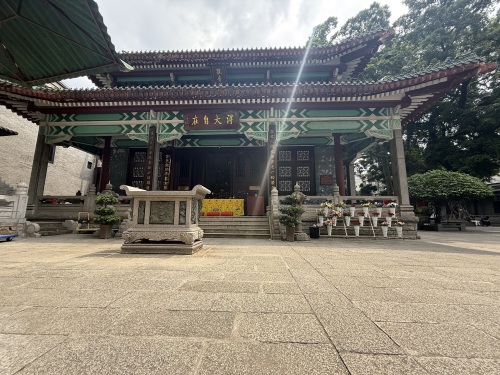
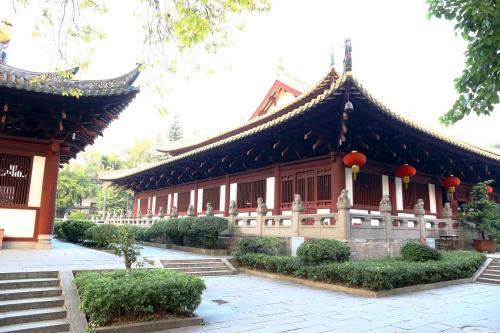
Originally founded in 537 CE under the Liang dynasty to house Buddhist relics, the temple was renamed by the great poet Su Dongpo in 1099 after he was charmed by its six banyan trees. The headline feature is the ‘Flowery Pagoda’ (花塔) — a 57.6 m, nine-storey octagonal pagoda built in 1097, with a bronze-and-iron pillar topping each tier. From street level it appears to be 17 storeys, the colourful effect that gave it its name. The pagoda was the tallest structure in Guangzhou until the early 20th century. The temple complex also contains a striking large bronze Buddha (1663) and a small but excellent Lingnan-style hall housing a famed statue of Bodhidharma. Active Buddhist temple — monks chant morning and evening. Entry ¥5, closed for special ceremonies on lunar 1st and 15th. 5-min walk to Guangxiao Temple (another major heritage site).
Highlights
- Flower Pagoda (花塔)1097 CE octagonal pagoda — climb to top floor for old-city views (small fee)
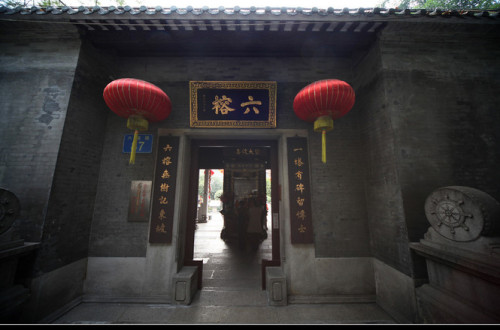
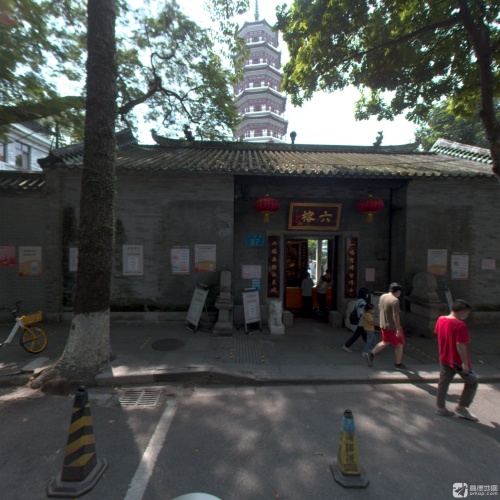
- Su Dongpo’s CalligraphyThe ‘Six Banyans’ inscription carved in stone at the entrance was written by Su himself in 1099
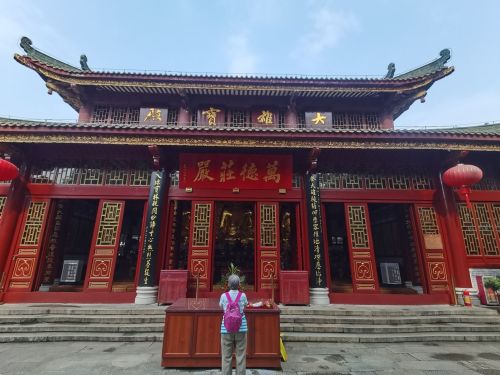
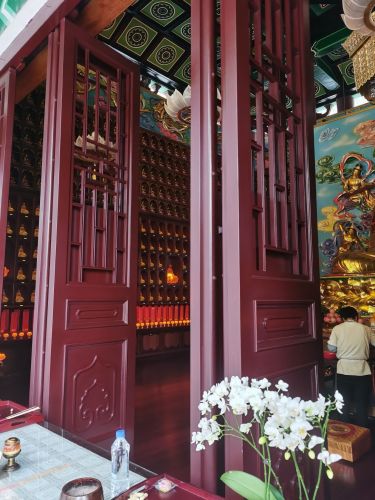
- Bronze Buddha Hall1663 Qing-dynasty bronze Buddha, 6m tall and 10 tonnes — rare survivor
- Bodhidharma StatueLingnan-style sculpture of the Zen Buddhism founder; the temple was once visited by him in 527 CE
- Morning Sutra ChantingMonks chant 6:30-7:30am — visitors welcome to observe silently
What Chinese travelers actually do here
Distilled from Chinese-language travel notes — the practical tips most English guides miss.
- Arrive for the 6:30-7:30am chanting; the hall is atmospheric and far emptier than mid-morning.
- Pay the small extra fee to climb the pagoda early, before the narrow staircase bottlenecks with groups.
- Look for Su Dongpo’s stone-carved ‘six banyans’ inscription by the entrance; most visitors photograph the pagoda and miss it.
- It’s a tiny five-minute walk to Guangxiao Temple, so pair the two heritage sites in one quiet morning.
- Bring small cash; the temple is effectively cash-only and there’s no real English signage or staff.
- Avoid the lunar 1st and 15th unless you want crowds, incense smoke, and possible partial closures for ceremonies.
- The 1663 bronze Buddha hall is dim and easy to walk past; step inside to see the rare 10-tonne survivor.
Photos
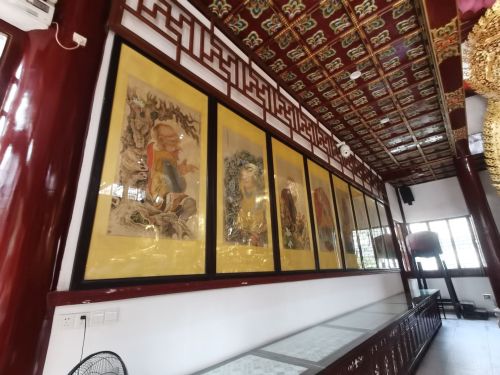
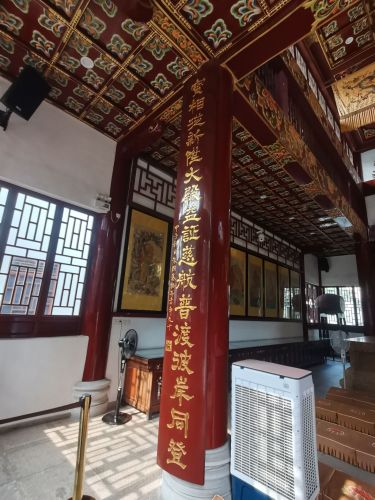
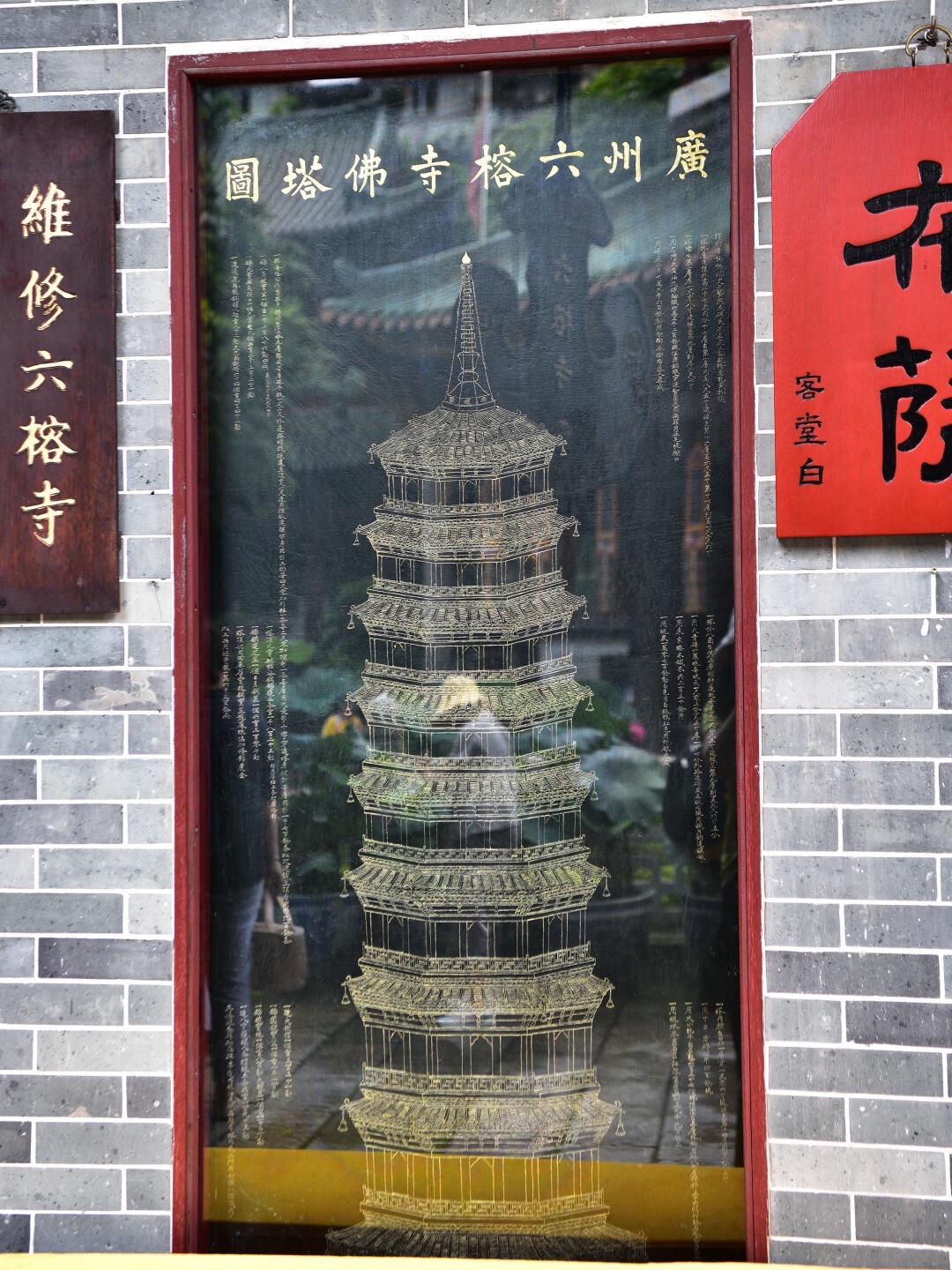
Show all 14 photosShow fewer
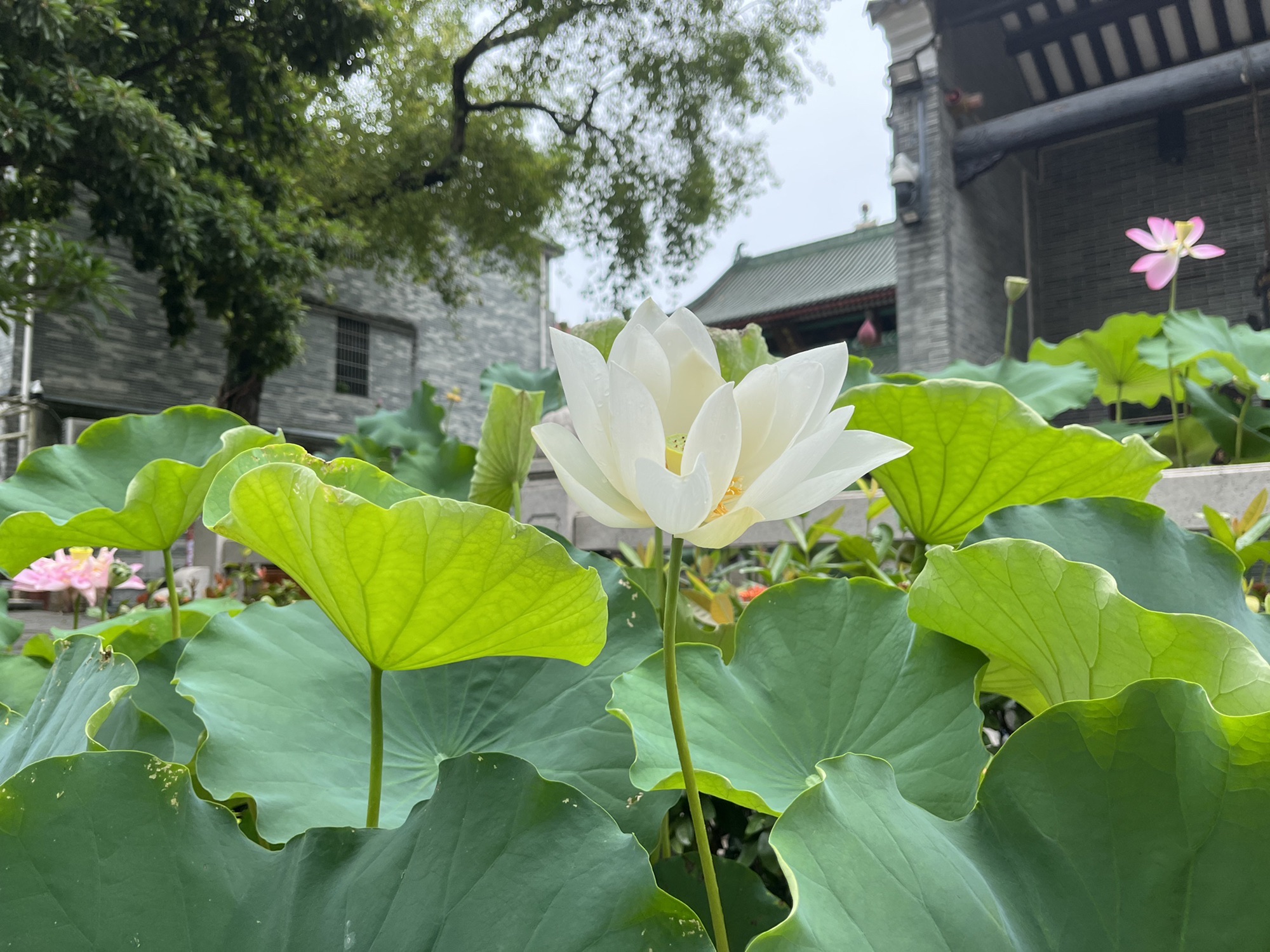
Videos


Frequently asked questions about Liurong Temple (Six Banyan)
- Can I climb the Flower Pagoda at Liurong Temple?
- Yes, for a small extra fee on top of the temple’s modest entry. The nine-storey, roughly 57-meter octagonal pagoda dates to 1097 and from the street appears to have 17 levels, which is how it earned the ‘Flowery Pagoda’ name. The top floor gives a rare elevated view over the old city. Stairs are narrow and steep, so it isn’t ideal for anyone with mobility limits.
- Is Liurong Temple a working temple or just a tourist site?
- It’s an active Buddhist temple, not a museum. Monks chant sutras in the early morning and again in the evening, and worshippers light incense throughout the day. Visitors are welcome to watch the morning chanting quietly, but dress modestly and keep your voice down. The site can close parts of itself for ceremonies, especially on the 1st and 15th of the lunar month.
- Why is it called the Temple of the Six Banyan Trees?
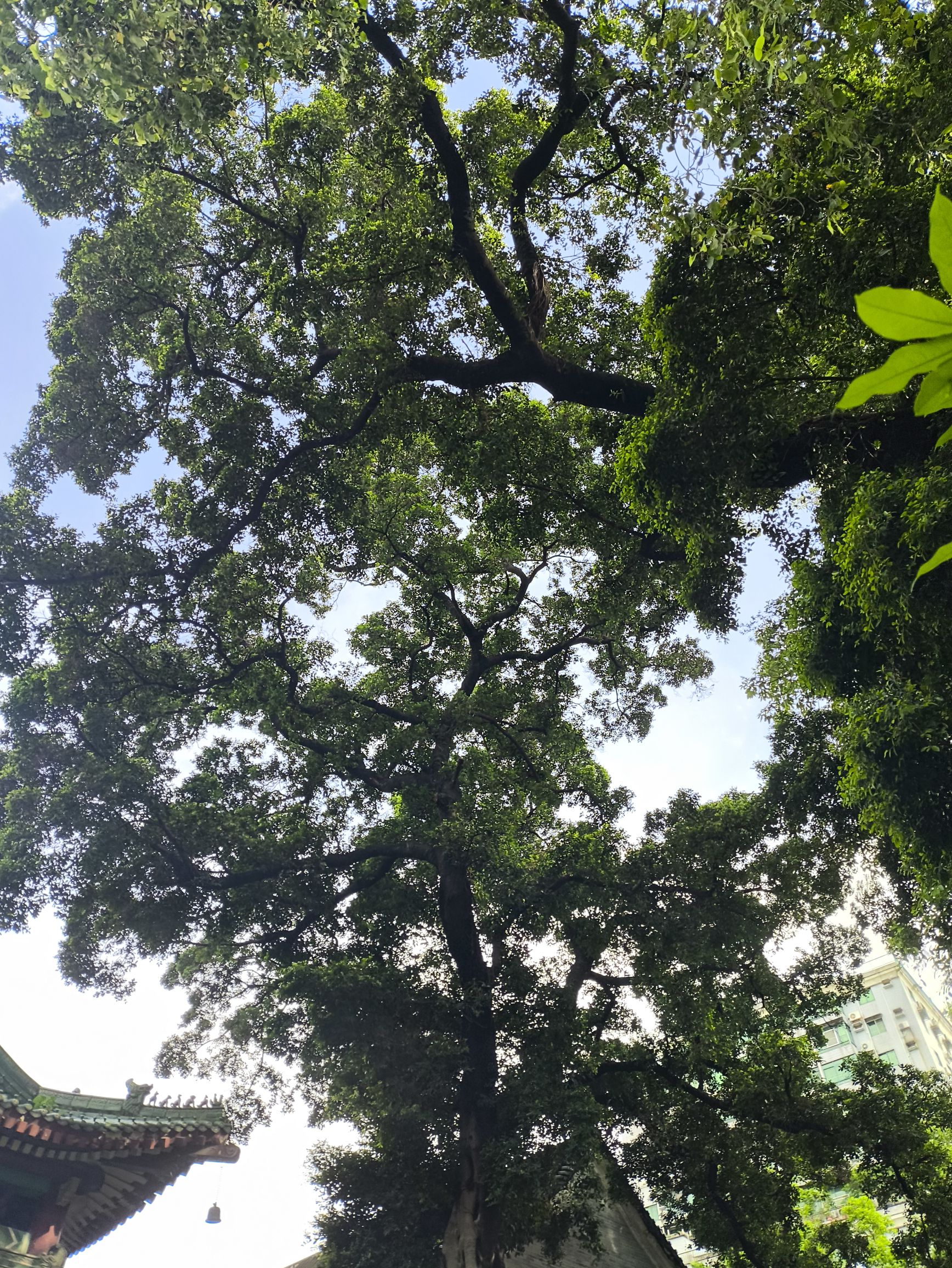
- The temple was founded in 537 CE, but the name came later. In 1099 the exiled poet Su Dongpo visited, admired six banyan trees growing in the courtyard, and wrote the two characters for ‘six banyans.’ That calligraphy was carved in stone and still stands near the entrance, and the nickname stuck even though the original trees are long gone.
More in Guangzhou
Plan your Guangzhou trip
- China High-Speed Rail (Gaotie) — The 2026 Foreigner’s GuideTransit · 11 min read
- Does Google Maps Work in China? (No — Here’s What Does, 2026)Internet & Apps · 9 min read
- WeChat Pay for Foreigners — The 2026 Setup GuidePayments · 9 min read
- China Trip Pre-Departure Checklist — The 30-Day TimelineVisa & Entry · 10 min read
- 240-Hour Visa-Free Transit to China — 2026 GuideVisa & Entry · 11 min read
- How to Use Alipay as a Foreigner in China — 2026 GuidePayments · 11 min read
- Do You Need a VPN for China? Legality, Setup Before You Fly, and What Breaks (2026)Internet & Apps · 13 min read
- China Travel Insurance Requirements 2026 — What You Actually NeedVisa & Entry · 10 min read
Trip.com link earns us a small commission · disclosure