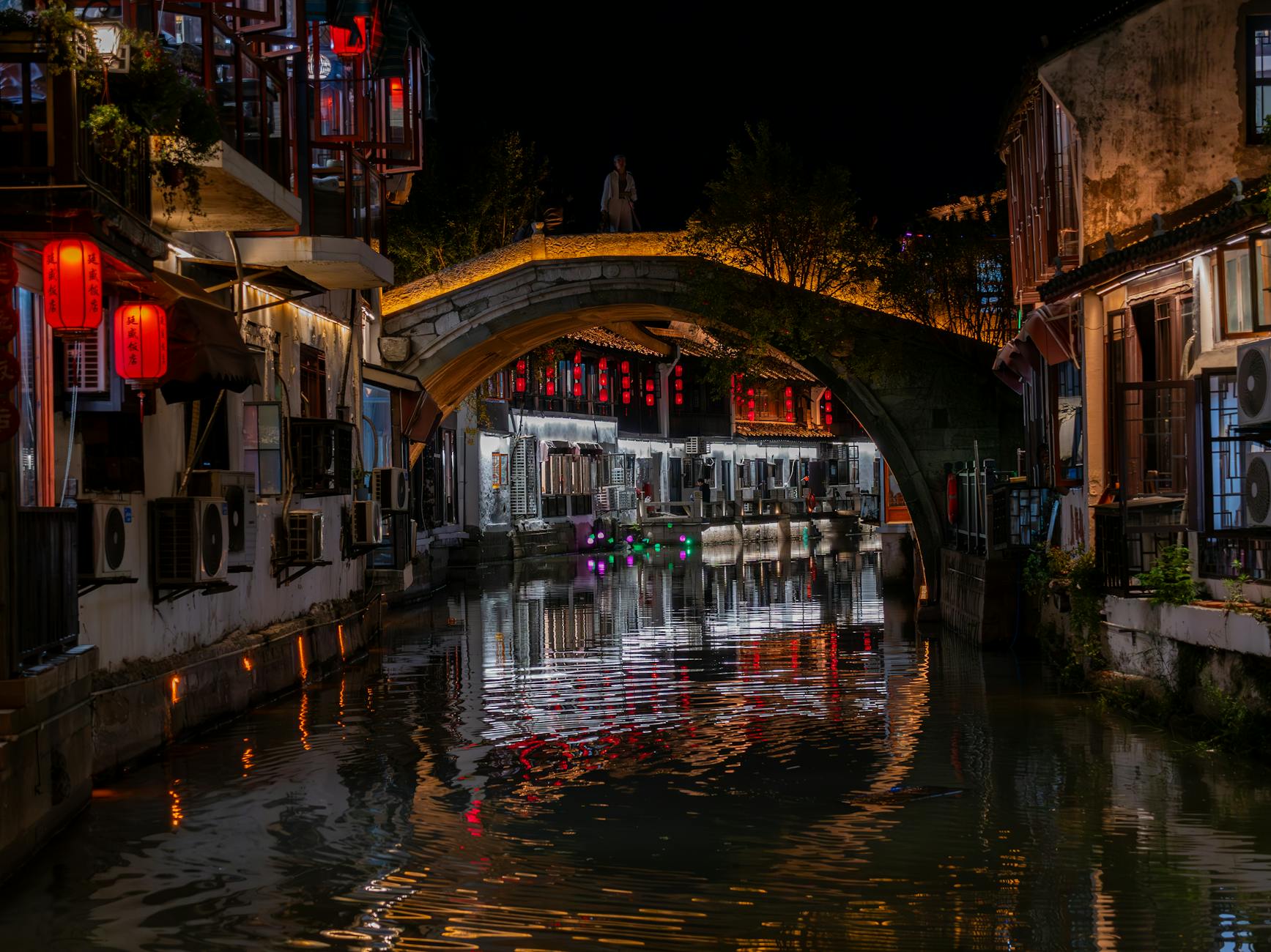
The other ancient water street — 3.6 km along the canal Bai Juyi commissioned in 825, slightly more commercial than Pingjiang but with grander historic bridges.
At a glance
- What it is
- Neighborhood
- Also known as
- 山塘街 (Shāntáng Jiē)
- Opening hours
- Always open
- Time needed
- 2-3 hours
- Best time to visit
- Evening 6-10 PM for lanterns + reflections
- Getting there
- Metro to the door
- English
- Some English signage
- Cards accepted
- Visa, Mastercard
- Entry
- Walk-in — no booking
- Wi-Fi
- Free Wi-Fi
- Address
- Shantang Street, Gusu District, Suzhou · 苏州市姑苏区山塘街
Shantang Street map & getting there
Taxi / DiDi? Show the driver: 苏州市姑苏区山塘街 · Shantang Street, Gusu District, Suzhou
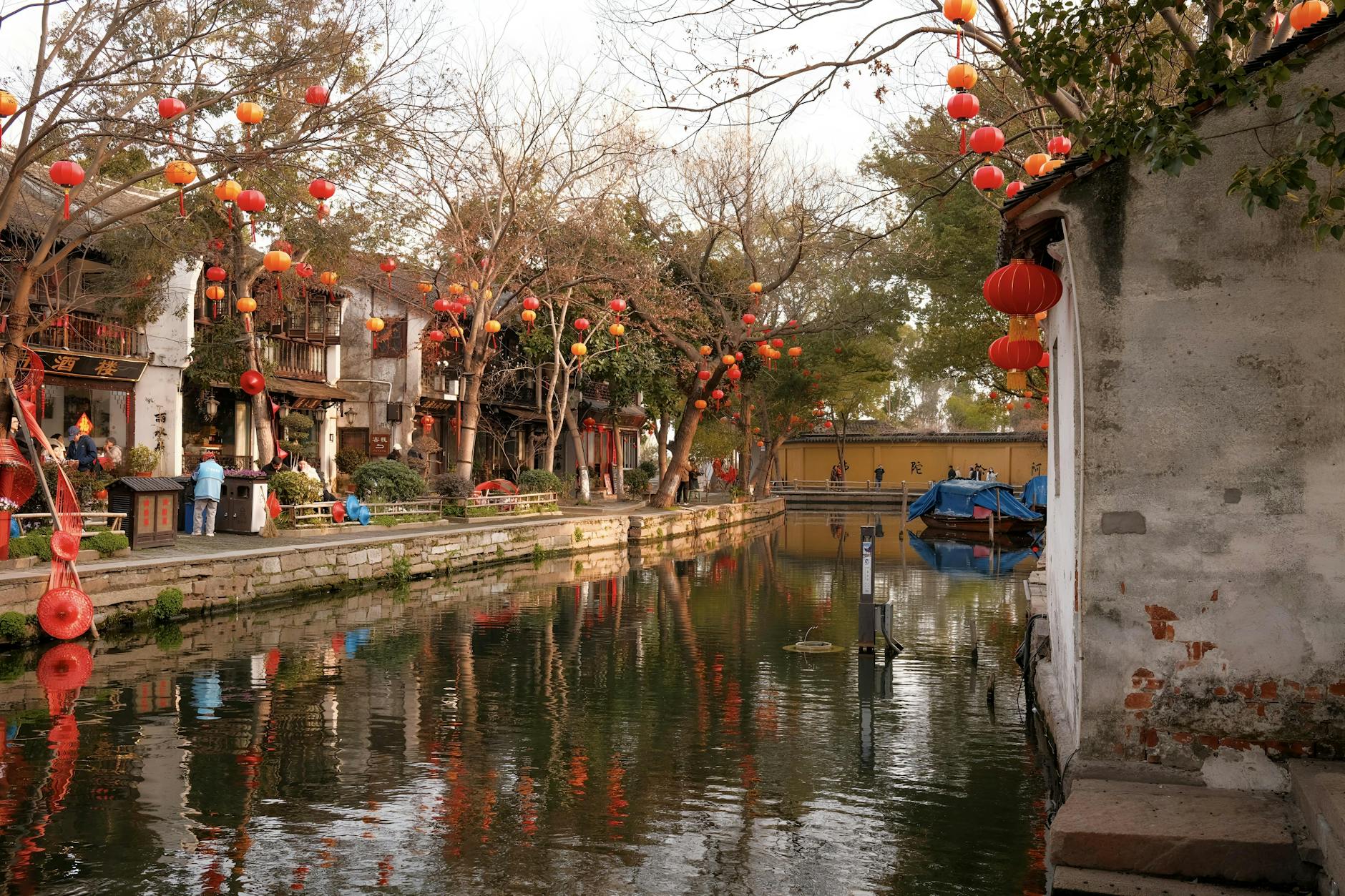
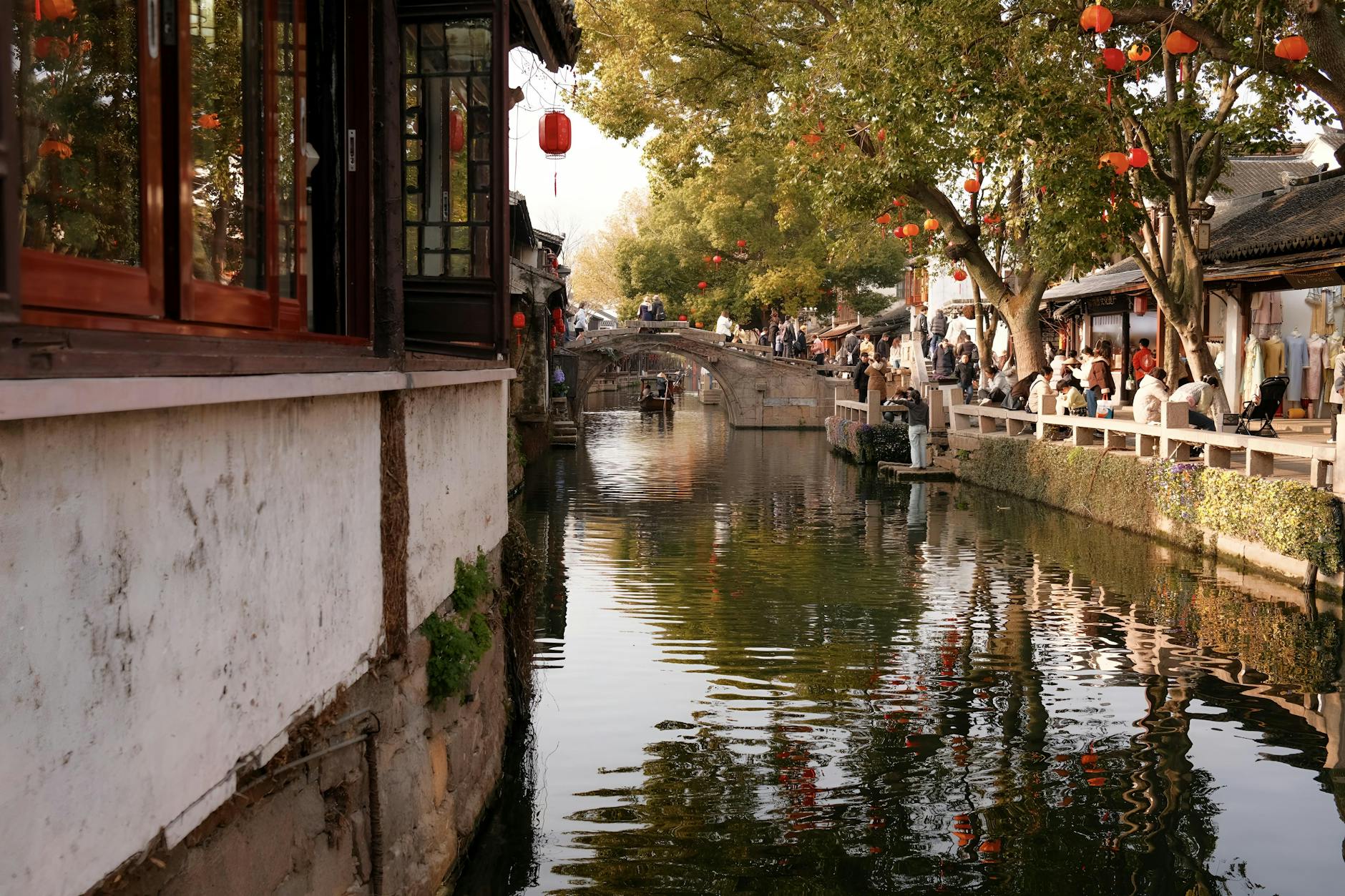
Shantang Street is Suzhou’s other preserved ancient water street, running 3.6 km along the canal that Tang poet-governor Bai Juyi commissioned in 825 AD. Compared to Pingjiang Road, Shantang is: (a) longer (3.6 km vs 1.6 km), (b) wider canal with larger stone arch bridges, (c) more commercial / touristy in its 1km central section, (d) less crowded toward its quieter western end. Most tour groups concentrate at the 1km Gongyuan Section near Tiger Hill — the eastern + western ends remain more authentic. The street is most photographed at night when red lanterns + canal reflections create the ‘Venice of the East’ vibe. Free to walk. Combine Shantang with Tiger Hill (3 min apart) for a half-day; or with Pingjiang (1 km southeast) for a full-day water-street comparison.
Highlights
- 3.6 km — Tang-era canalBai Juyi commissioned the canal in 825 AD
- Grand stone arch bridgesWider canal + larger bridges than Pingjiang Road
- Western quiet endWalk past the tourist 1km center for authentic feel
What Chinese travelers actually do here
Distilled from Chinese-language travel notes — the practical tips most English guides miss.
- Tang poet-governor Bai Juyi commissioned the Shantang Canal construction in 825 AD specifically to connect Suzhou city to Tiger Hill (then a religious + scenic destination). He also built the original road alongside the canal. The 1,200-year-old planning concept is the entire reason the street exists.
- Best photo angles: stone arch bridges 5 + 6 (counting from east) are the most photogenic — wider arches, more dramatic reflections. The Tonggui Bridge (通贵桥) is the most-photographed; arrive 30 min before sunset for the iconic shot.
- The western end (1 km closest to Tiger Hill) has a series of old-style bridges with names: Tonggui Bridge, Pumin Bridge, Lvbao Bridge. Walking this section in late afternoon, then continuing to Tiger Hill, makes a logical 2-hour cultural walk.
- Food on Shantang vs Pingjiang: Shantang has more ‘restaurant chains’ and ‘snack vendors’ in the central 1km. For authentic Suzhou food (especially noodles), Pingjiang’s side-alleys are better. Shantang excels at canal-side dining with view — restaurants over the water (¥60-150/person) give experience over food quality.
- The ‘Maple Bridge’ (枫桥) — referenced in Zhang Ji’s 8th-century poem about Hanshan Temple — is at the WESTERN edge of Shantang Street area, near Hanshan Temple. Combine Shantang afternoon + Hanshan Temple + Maple Bridge for a poetry-themed walking route.
- Avoid the obvious ‘photo prop costume’ rental booths at the main entry — overpriced (¥80-150/30-min) and the costumes are polyester. If you want a traditional photo, use the Suzhou Silk Museum costume rental (¥40, real silk).
Photos
Watch creators visit Shantang Street
Each clip is timestamped to the moment the creator arrives at this stop.
1 Day in Suzhou, Jiangsu: The Perfect Day Trip From Shanghai
Expat NattStarts at 6:27
Shan Tang Jie
suzhou vlog 🇨🇳 aesthetic old streets, ancient canals, chinese gardens ⛲️
linyiStarts at 11:12
Shantang Street
Videos

Frequently asked questions about Shantang Street
- Shantang Street or Pingjiang Road — which one?
- Pingjiang for atmosphere + Pingtan tea houses (more pedestrian-intimate, narrower path, more cultural programming). Shantang for canal-scale + bridges (longer 3.6 km, wider canal, grander stone bridges). If you only have ONE evening, Pingjiang. If you have a full day, do both — they’re 1 km apart, take a quick taxi or walk between them.
- Where does Shantang Street start and end?
- Eastern end: Shantang Cultural Square (near Suzhou Garden Bowl shopping mall). Western end: Tiger Hill base. The 3.6 km runs mostly westward along the historic canal. The middle 1 km (Gongyuan Section) is the tourist heart with shops, restaurants, lanterns. The eastern + western 800m each are quieter with more authentic neighborhood feel.
- When is Shantang busiest?
- 7-9 PM in summer + Chinese national holidays — the central 1 km becomes shoulder-to-shoulder with lantern-photo tourists. For calmer evening visits: arrive 5:30-6:30 PM (early lanterns + low crowds) or after 9 PM (lanterns dimming + most tourists leaving). The western quiet end stays calm even during peak hours.
- Should I take the canal boat?
- Yes — ¥80 for 30-min boat down the central section. Better than Pingjiang’s boat ride because the canal is wider and the bridges are more impressive. Departures every 30 min from multiple piers along the central 1 km. Evening boats (after 6 PM) get the lantern reflection shots; daytime boats give clearer architectural views.
- How does Shantang Street fit a Tiger Hill day?
- Tiger Hill is 3 minutes by taxi from Shantang’s western end — Bai Juyi’s original canal connected the two. Standard route: Tiger Hill morning (8-12 AM) → Shantang western end lunch (12-2 PM) → walk eastward through the canal-side street (2-6 PM) → dinner at central Shantang (6-8 PM). Full-day cultural walk.
More in Suzhou
Plan your Suzhou trip
- Hangzhou vs Suzhou — Which Day Trip Should You Take from Shanghai?Itineraries · 8 min read
- China High-Speed Rail (Gaotie) — The 2026 Foreigner’s GuideTransit · 11 min read
- Does Google Maps Work in China? (No — Here’s What Does, 2026)Internet & Apps · 9 min read
- WeChat Pay for Foreigners — The 2026 Setup GuidePayments · 9 min read
- China Trip Pre-Departure Checklist — The 30-Day TimelineVisa & Entry · 10 min read
- 240-Hour Visa-Free Transit to China — 2026 GuideVisa & Entry · 11 min read
- How to Use Alipay as a Foreigner in China — 2026 GuidePayments · 11 min read