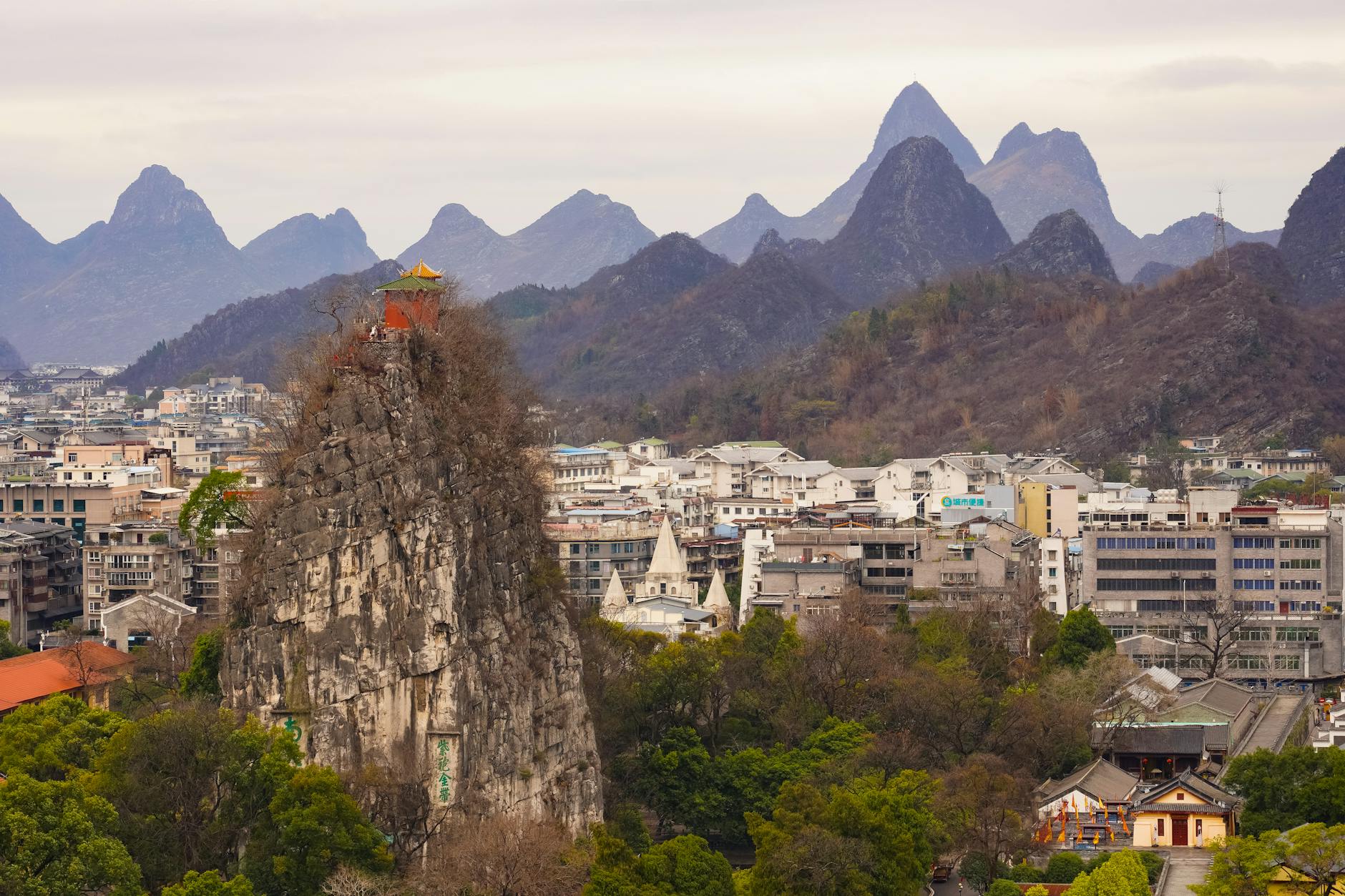
Ming-dynasty princely palace in central Guilin — built 20 years before the Forbidden City, encloses Solitary Beauty Peak.
At a glance
- What it is
- Heritage Site
- Also known as
- 靖江王城 (Jìngjiāng Wángchéng)
- Opening hours
- 8 AM – 6 PM
- Time needed
- 2-3 hours
- Best time to visit
- Morning before the climb gets too hot
- Getting there
- Metro to the door
- English
- English tours available
- Cards accepted
- Visa, Mastercard
- Entry
- Passport booking required
- Wi-Fi
- Free Wi-Fi
- Address
- 1 Wangcheng Road, Xiufeng District, Guilin · 桂林市秀峰区王城路1号
Ruins of Jingjiang Princes' City map & getting there
Taxi / DiDi? Show the driver: 桂林市秀峰区王城路1号 · 1 Wangcheng Road, Xiufeng District, Guilin
The Jingjiang Princes’ City is a Ming-dynasty (1372) walled palace complex in central Guilin — built 20 years BEFORE the Forbidden City in Beijing, and following the same architectural plan but on smaller scale. It served as the residence of 14 generations of Jingjiang princes (a branch of the Ming royal family). Today the walls + main palace remain, with Guangxi Normal University using part of the grounds. The most striking feature is Solitary Beauty Peak (独秀峰), a 152m karst pillar that rises directly through the palace complex — climb the 300 steps to the summit (¥130 combined entry) for a unique city view through the palace walls. The view captures Guilin’s signature karst landscape framed by Ming-era red palace architecture. Worth 2-3 hours.
Highlights
- Pre-Forbidden City palaceBuilt 1372, 20 years before Beijing’s Forbidden City
- Solitary Beauty Peak (独秀峰)152m karst pillar inside palace walls; 300-step climb
- Ming + university coexistenceGuangxi Normal University shares the grounds
What Chinese travelers actually do here
Distilled from Chinese-language travel notes — the practical tips most English guides miss.
- The Jingjiang Princes (靖江王) were a Ming-dynasty princely branch descended from the emperor’s elder cousin (not direct lineage), assigned to govern Guangxi province from 1372. 14 generations of princes lived here until the Qing dynasty took over in 1644.
- Solitary Beauty Peak (独秀峰) inside the palace is the source of the phrase ‘Guilin landscape is the best under heaven’ (桂林山水甲天下) — the inscription is carved on the peak’s south face by a 12th-century Song dynasty official. Still legible.
- Best photo: from Solitary Beauty Peak summit looking SOUTH — you see Ming palace courtyards and roof tiles in foreground, then Guilin’s modern city, then karst peaks beyond. This three-layer composition is unique to this viewpoint.
- The palace’s main throne hall is now a museum with Ming-era furniture reproductions and informational placards. About 20-30 min to walk through carefully. English signage is sparse; the ¥30 audio guide fills the gap.
- Combine with the adjacent Wang Cheng Walking Street (王城步行街) for lunch after — local Guilin restaurants in restored Ming-era street-front buildings. Avoid the directly-touristy restaurants at the main palace gate; walk one block in for fair-priced local food.
- Photography: tripods aren’t allowed inside the palace buildings but are permitted in courtyards and on Solitary Beauty Peak. Bring telephoto for capturing the karst peaks framed through palace windows — the signature artistic angle.
Photos
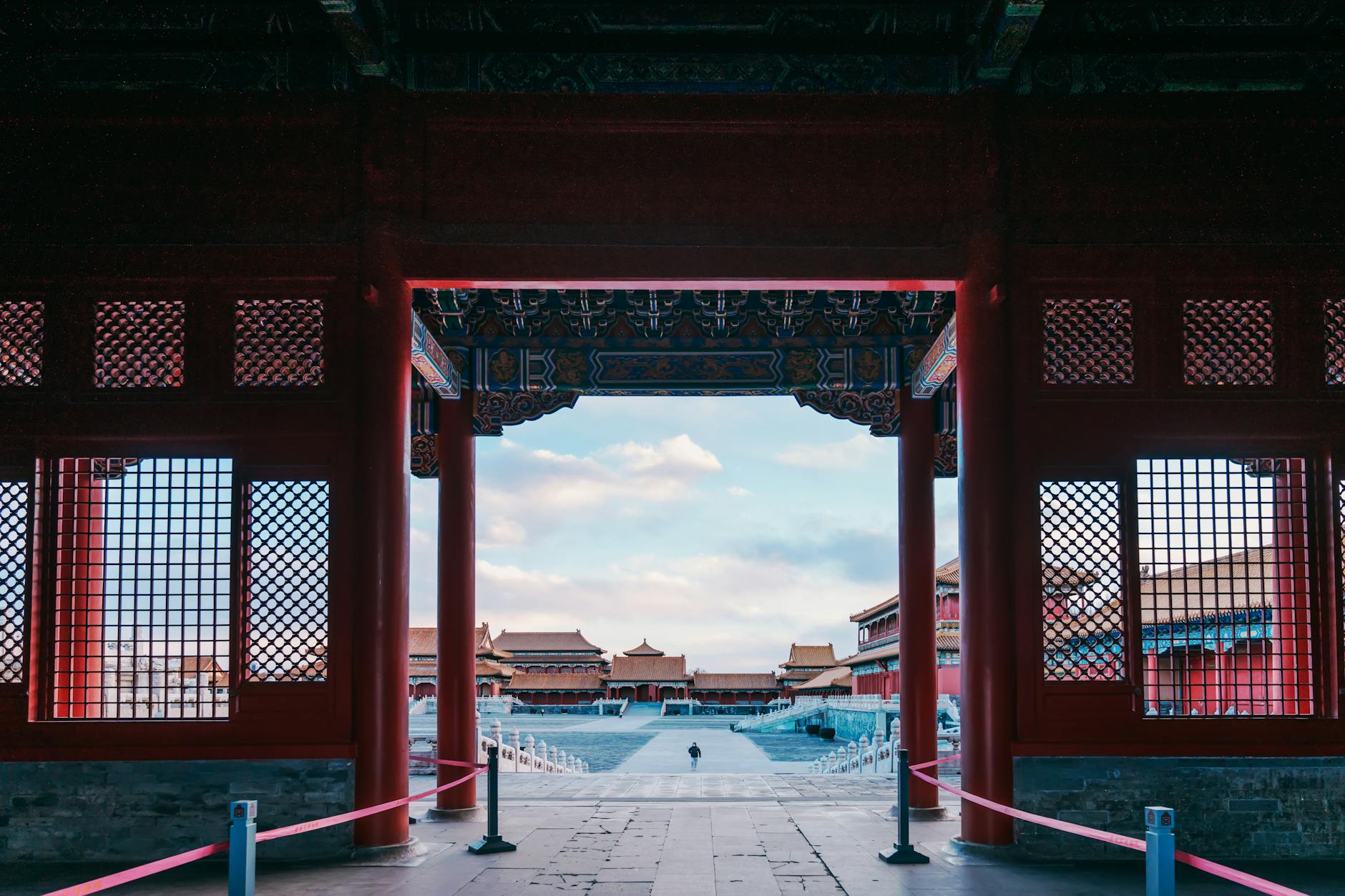
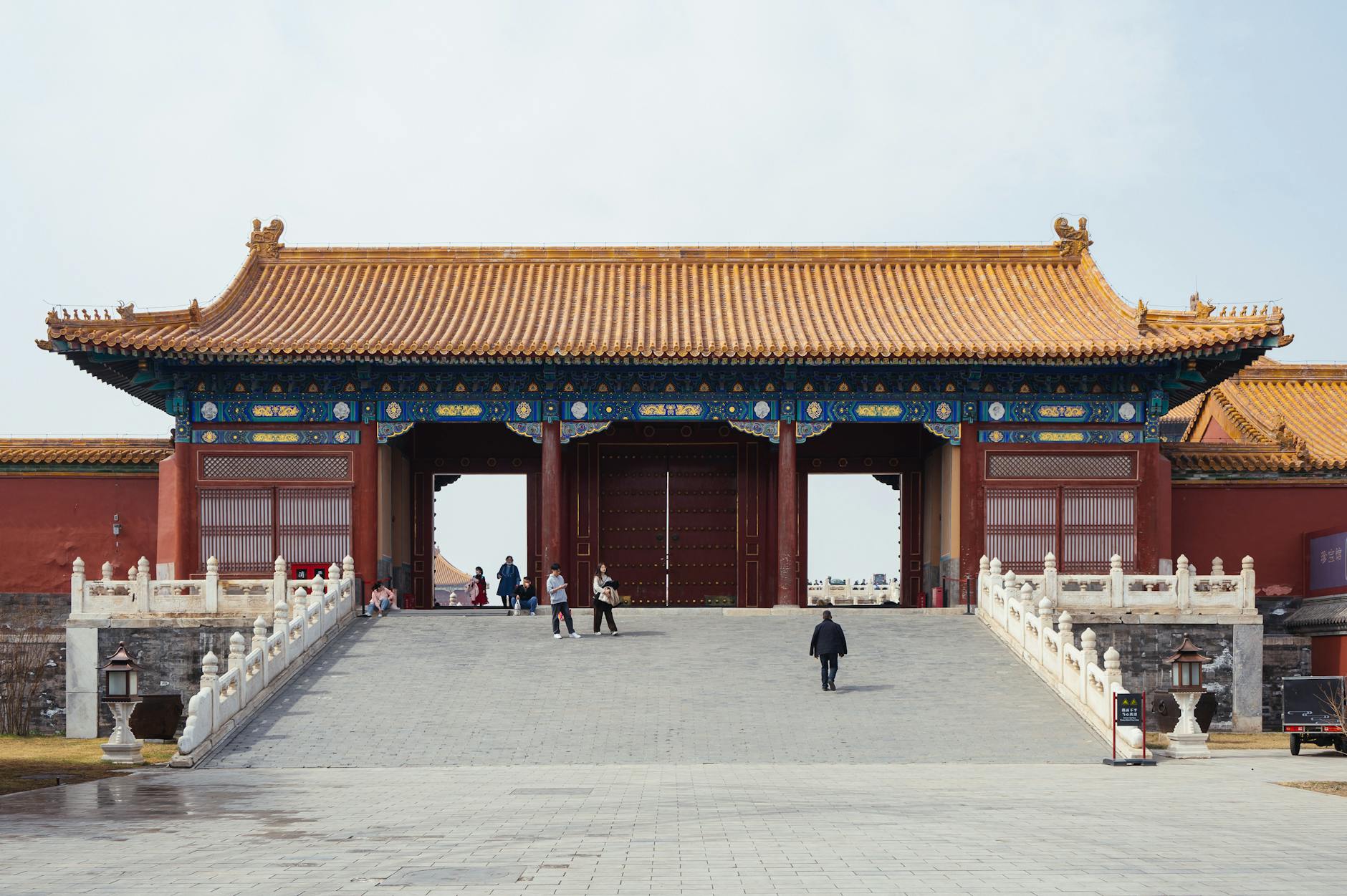
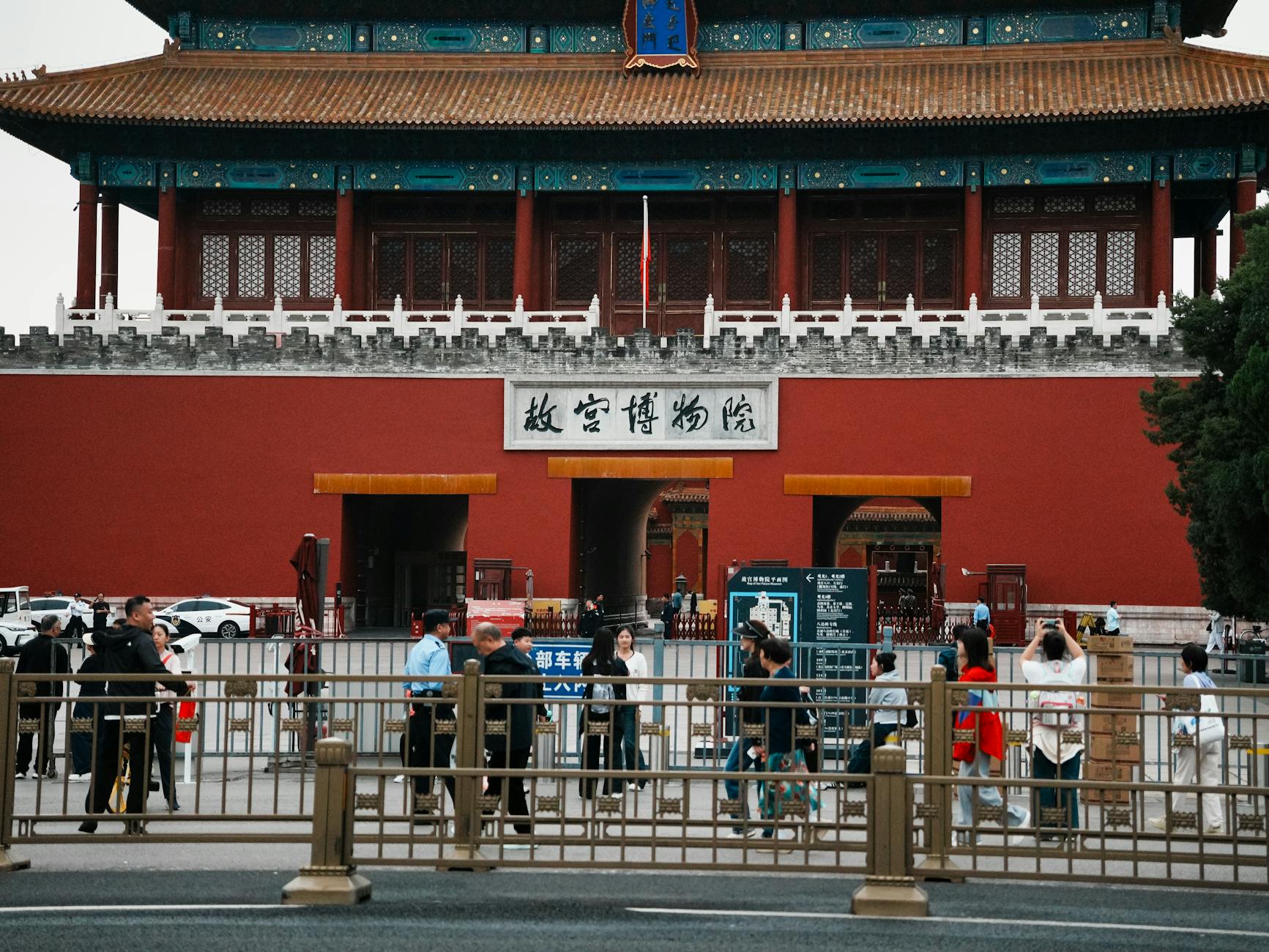
Watch creators visit Ruins of Jingjiang Princes' City
Each clip is timestamped to the moment the creator arrives at this stop.
Best Way to Spend 4 days in Guilin & Yangshuo
HOLIDAYING YOUR WAYStarts at 5:01
Jingjiang Prince City Scenic Area – East West Lane, Xiaoyao Tower
Frequently asked questions about Ruins of Jingjiang Princes' City
- Why visit the Princes’ City instead of just doing Solitary Beauty Peak?
- They’re a combined ticket (¥130) — you can’t enter the peak without entering the palace. The palace walls + Ming architecture give 60-80% of the visit’s value; Solitary Beauty Peak’s summit climb adds the photo payoff. Together they’re 2-3 hours of genuinely unique heritage that doesn’t exist anywhere else in Guilin.
- How is it ‘pre-Forbidden-City’?
- Built 1372, 20 years BEFORE Beijing’s Forbidden City (1406). Both used the same architectural design pattern (axial layout, color-coded roof tiles by rank, ceremonial gate sequence). The Jingjiang Princes’ City is smaller in scale (princely palace, not imperial) but architecturally older — visiting here gives historical context for what Beijing’s Forbidden City was later modeled on.
- Is Solitary Beauty Peak climb worth it?
- Yes if you have moderate fitness — 300 steps (15-20 min) gives a unique vantage: Guilin’s karst landscape framed by Ming-dynasty red palace walls in the foreground. No other Guilin viewpoint provides this combination. Skip if you have knee issues or limited mobility.
- Is there an English audio guide?
- Yes — bilingual audio guide (Mandarin + English) available at the entry for ¥30 deposit. Necessary for understanding the palace history; the Chinese-only signage assumes Chinese-historical context most foreigners don’t have. Worth the ¥30 even if you skip Solitary Beauty Peak.
- Can I see the university campus inside?
- Yes — Guangxi Normal University occupies the eastern half of the original palace grounds. You can walk freely through their courtyards during visiting hours (8 AM - 5 PM). Bring your passport for entry verification. The university buildings are 1950s-2000s constructions but coexist with surviving Ming walls — interesting Chinese ‘old + new’ juxtaposition.
More in Guilin
Plan your Guilin trip
- Guilin vs Zhangjiajie — Which Karst Landscape Should You Pick?Itineraries · 8 min read
- China High-Speed Rail (Gaotie) — The 2026 Foreigner’s GuideTransit · 11 min read
- Does Google Maps Work in China? (No — Here’s What Does, 2026)Internet & Apps · 9 min read
- WeChat Pay for Foreigners — The 2026 Setup GuidePayments · 9 min read
- 240-Hour Visa-Free Transit to China — 2026 GuideVisa & Entry · 11 min read
- How to Use Alipay as a Foreigner in China — 2026 GuidePayments · 11 min read
- Do You Need a VPN for China? Legality, Setup Before You Fly, and What Breaks (2026)Internet & Apps · 13 min read