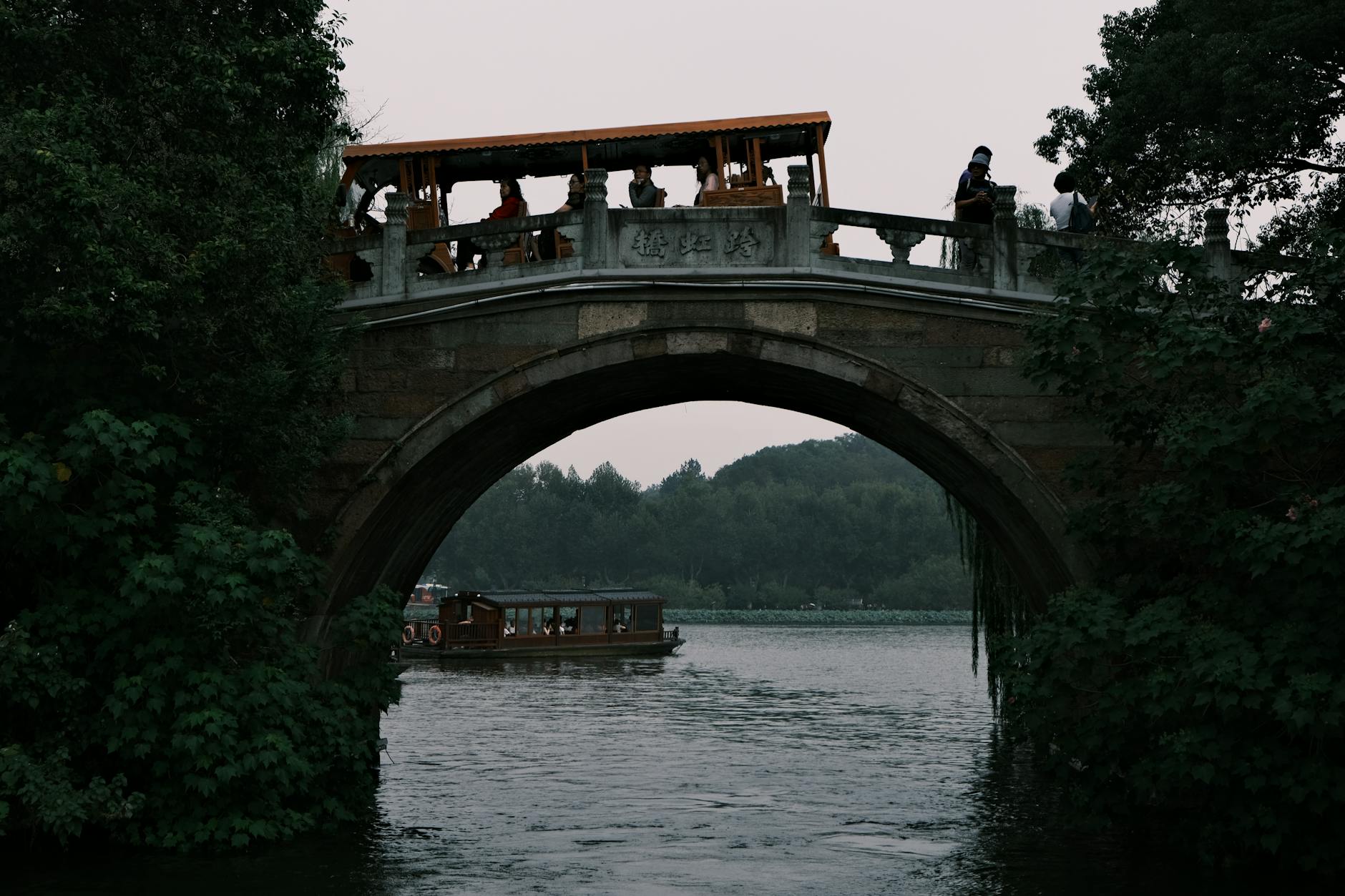
2.8 km willow + peach tree causeway built by Su Dongpo (1089) — UNESCO heritage walking path with six humped bridges.
At a glance
- What it is
- Outdoors
- Also known as
- 苏堤 (Sū Dī)
- Opening hours
- Always open
- Time needed
- 1.5 hours
- Best time to visit
- Early April for peach blossoms; September for osmanthus
- Getting there
- Metro to the door
- English
- Some English signage
- Cards accepted
- Cash only
- Entry
- Walk-in — no booking
- Wi-Fi
- Free Wi-Fi
- Address
- Su Causeway, West Lake · 西湖苏堤
Su Causeway map & getting there
Taxi / DiDi? Show the driver: 西湖苏堤 · Su Causeway, West Lake
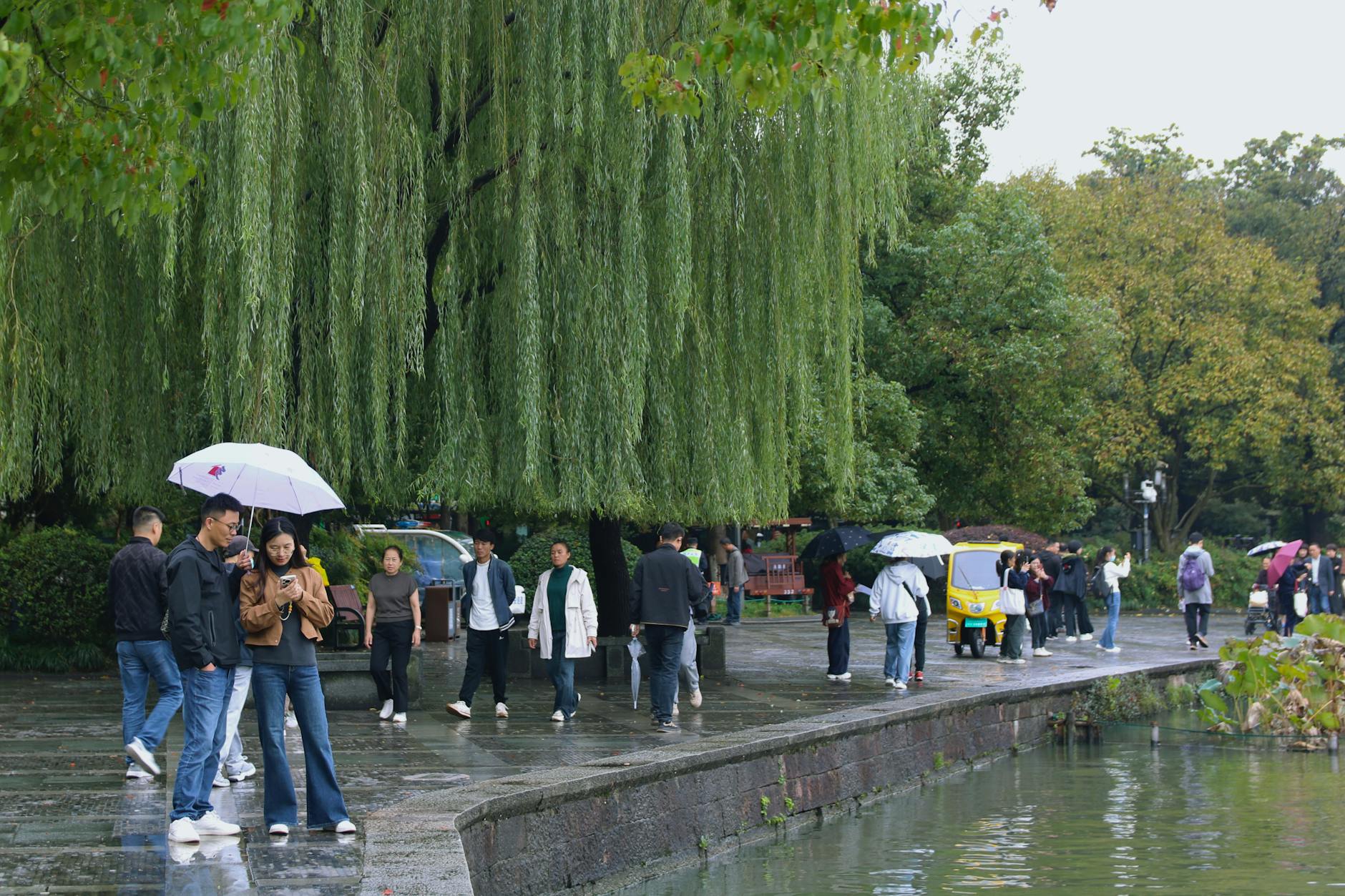
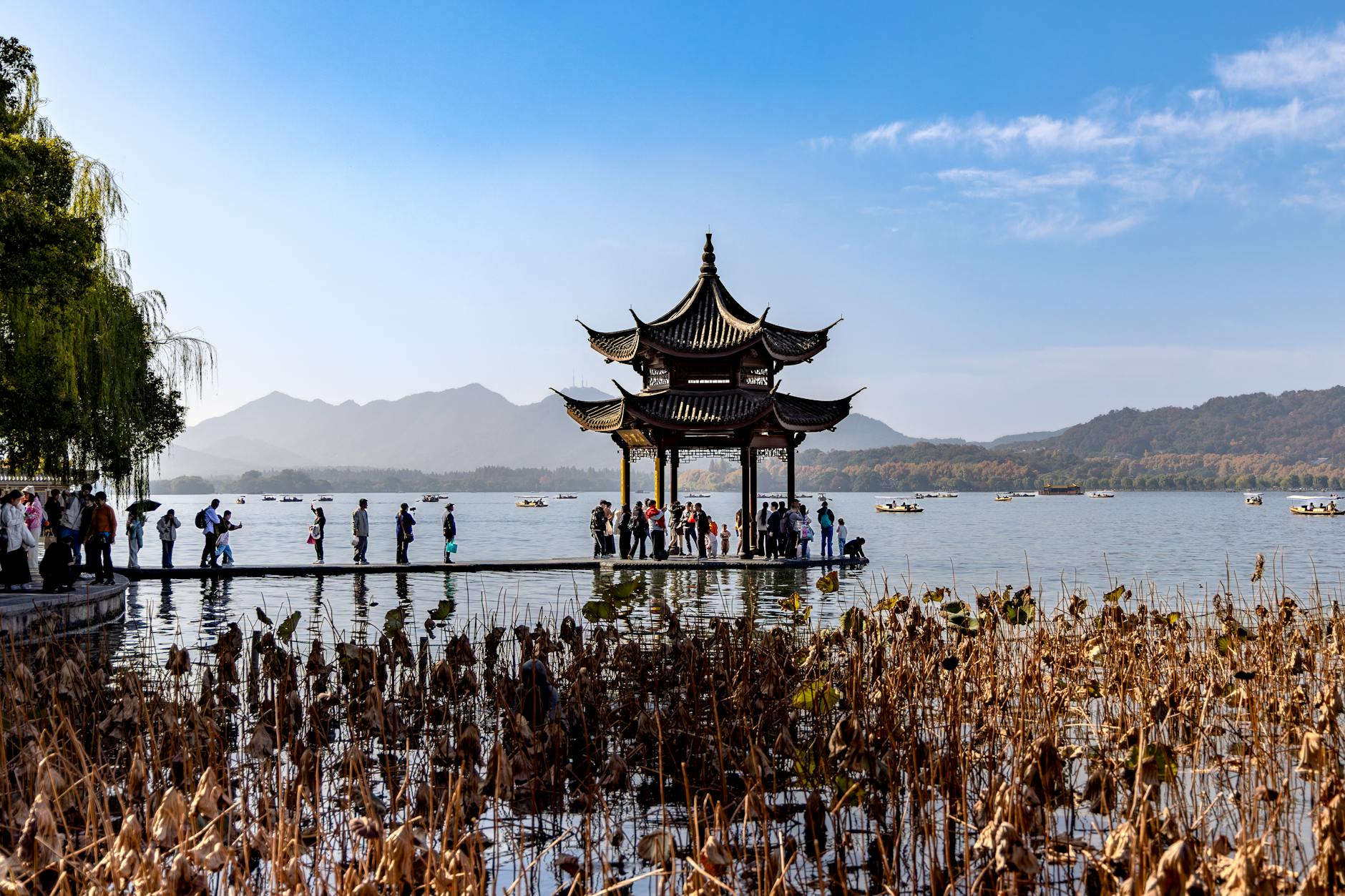
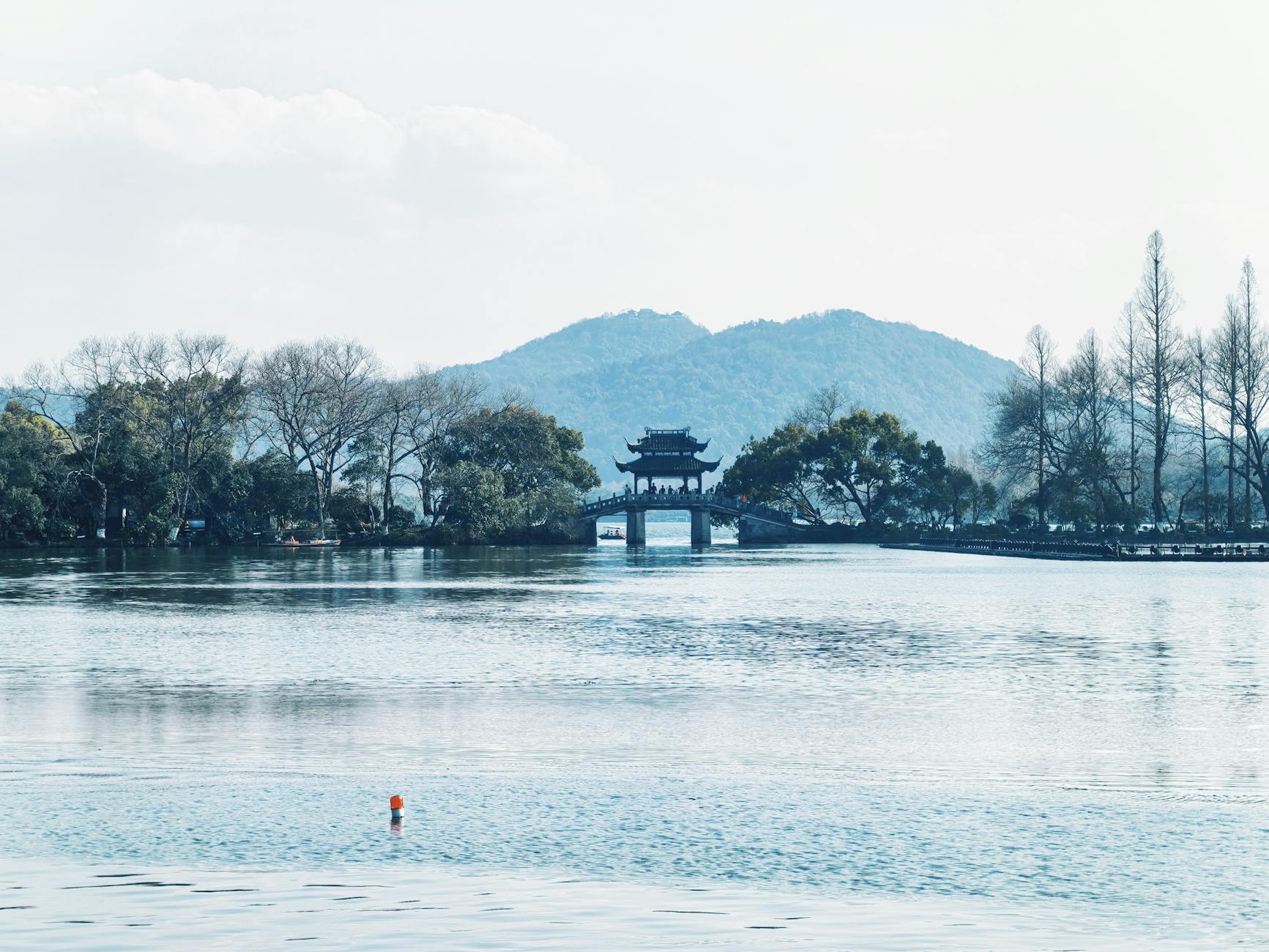
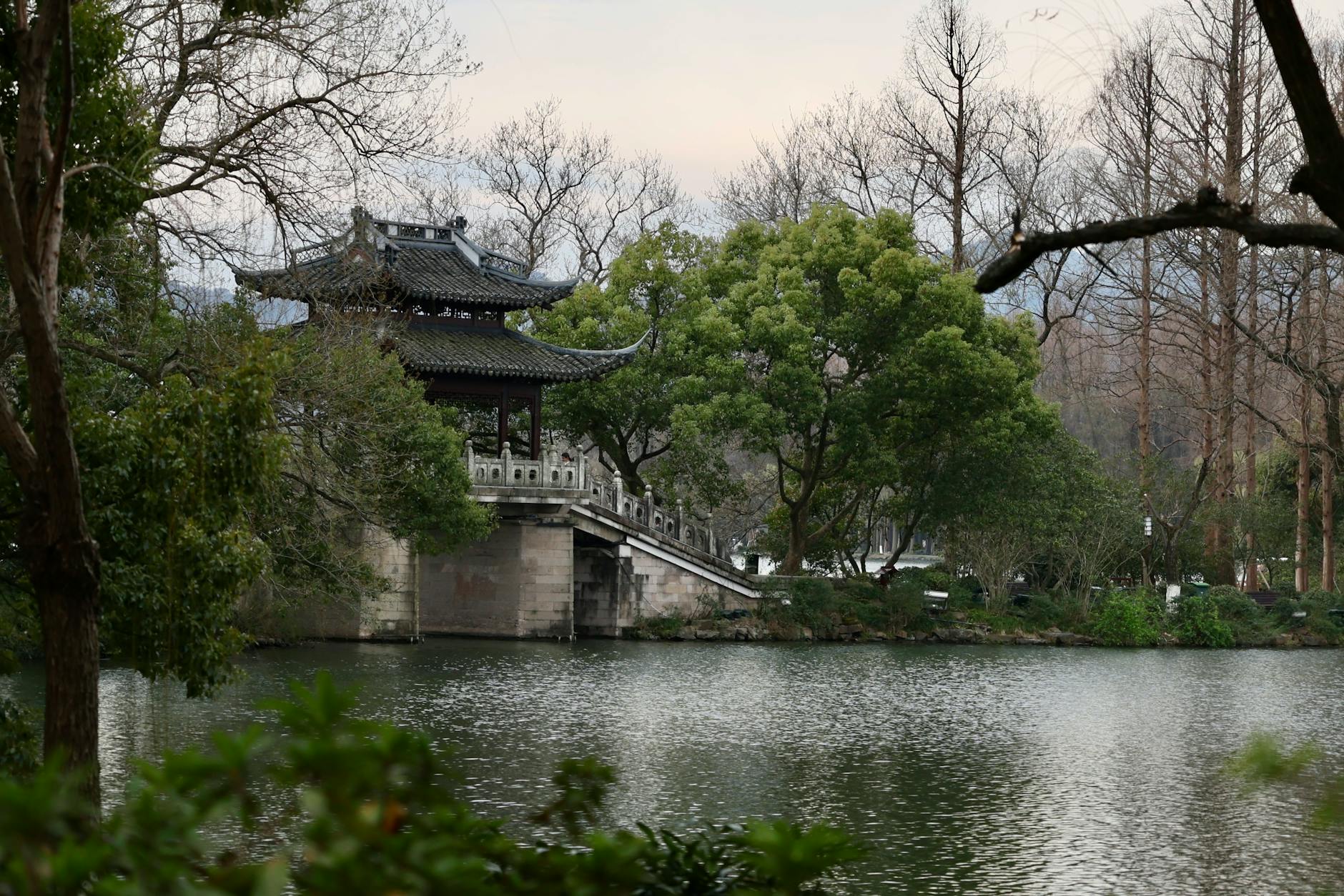
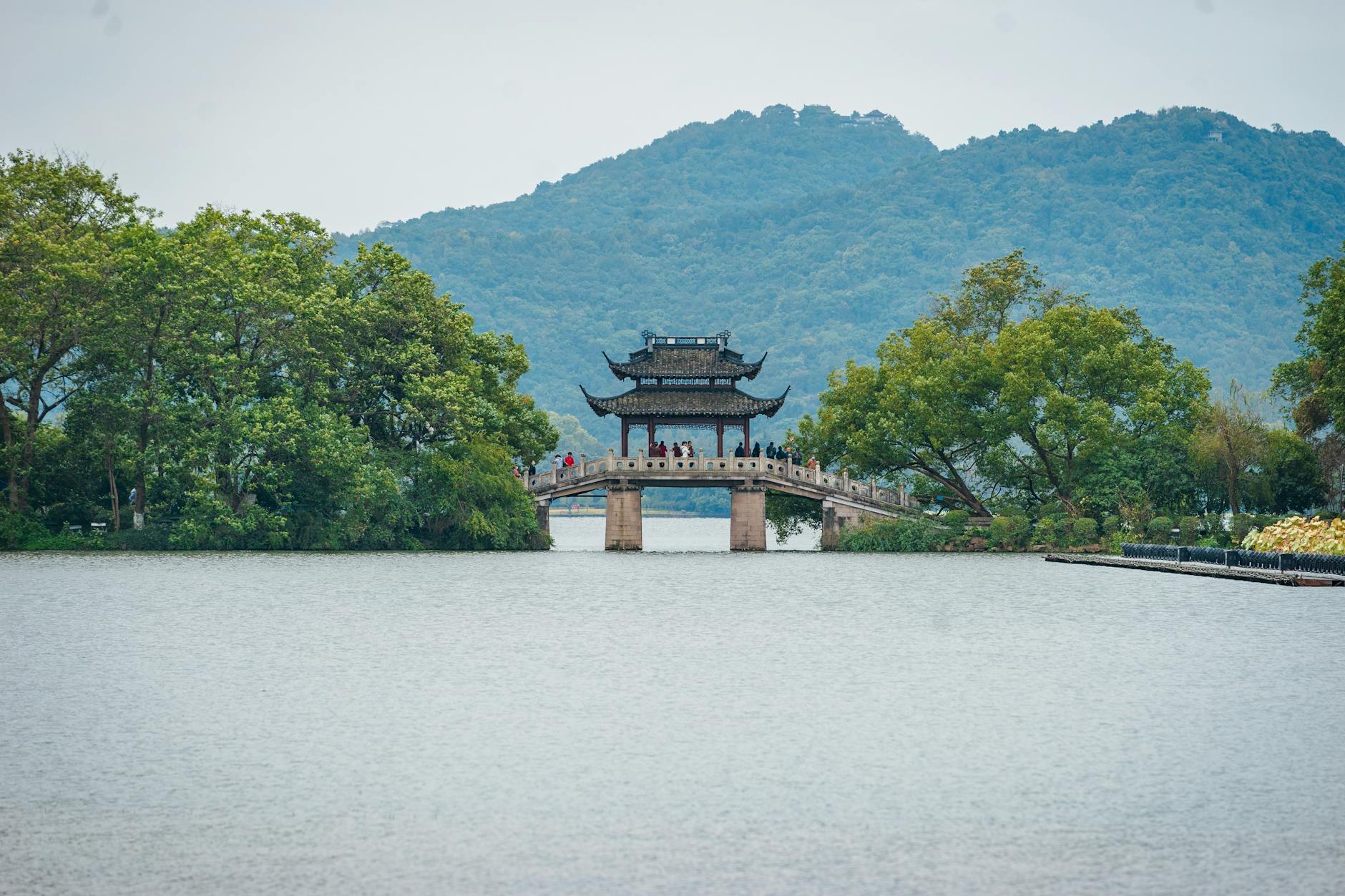
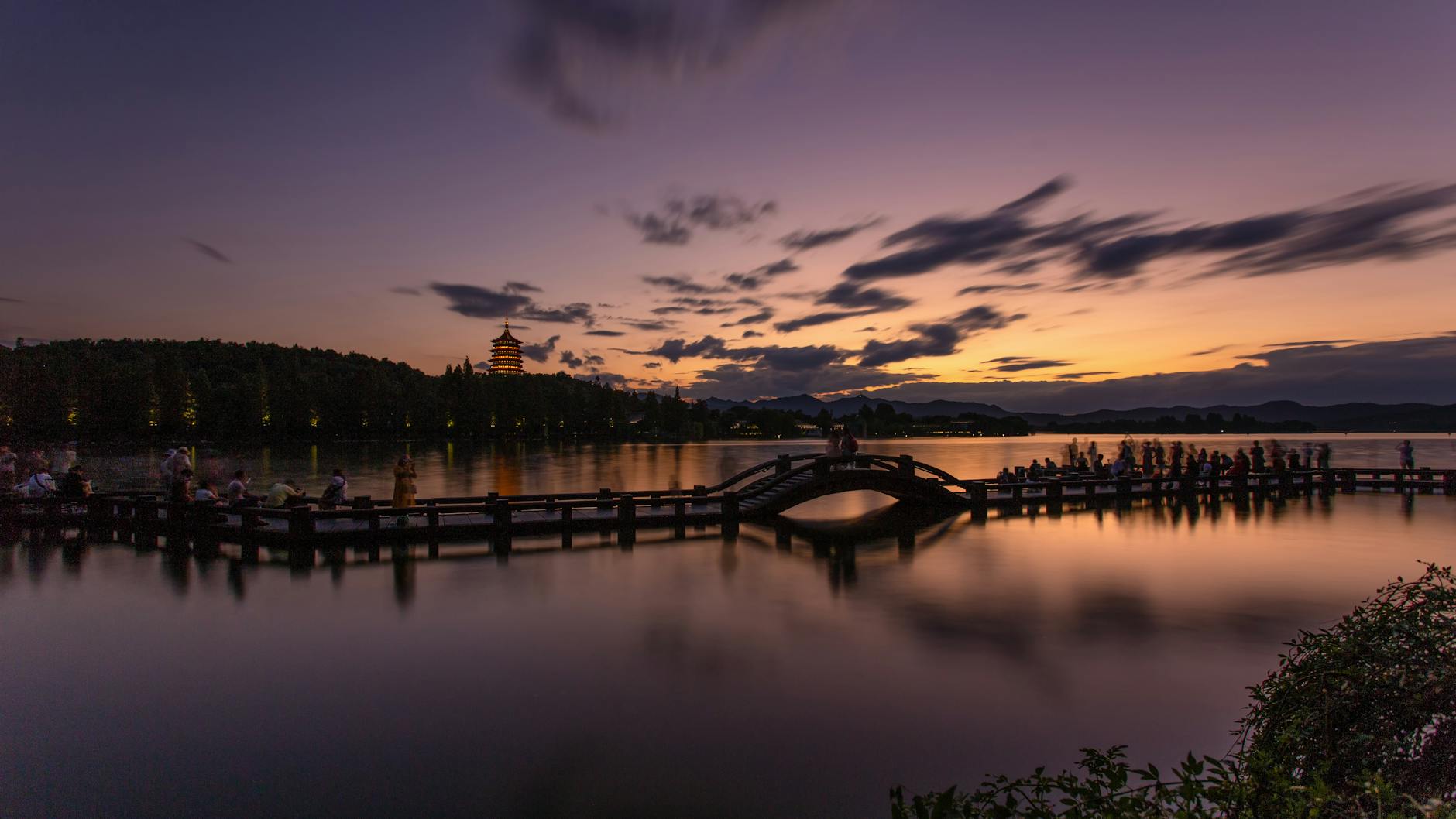
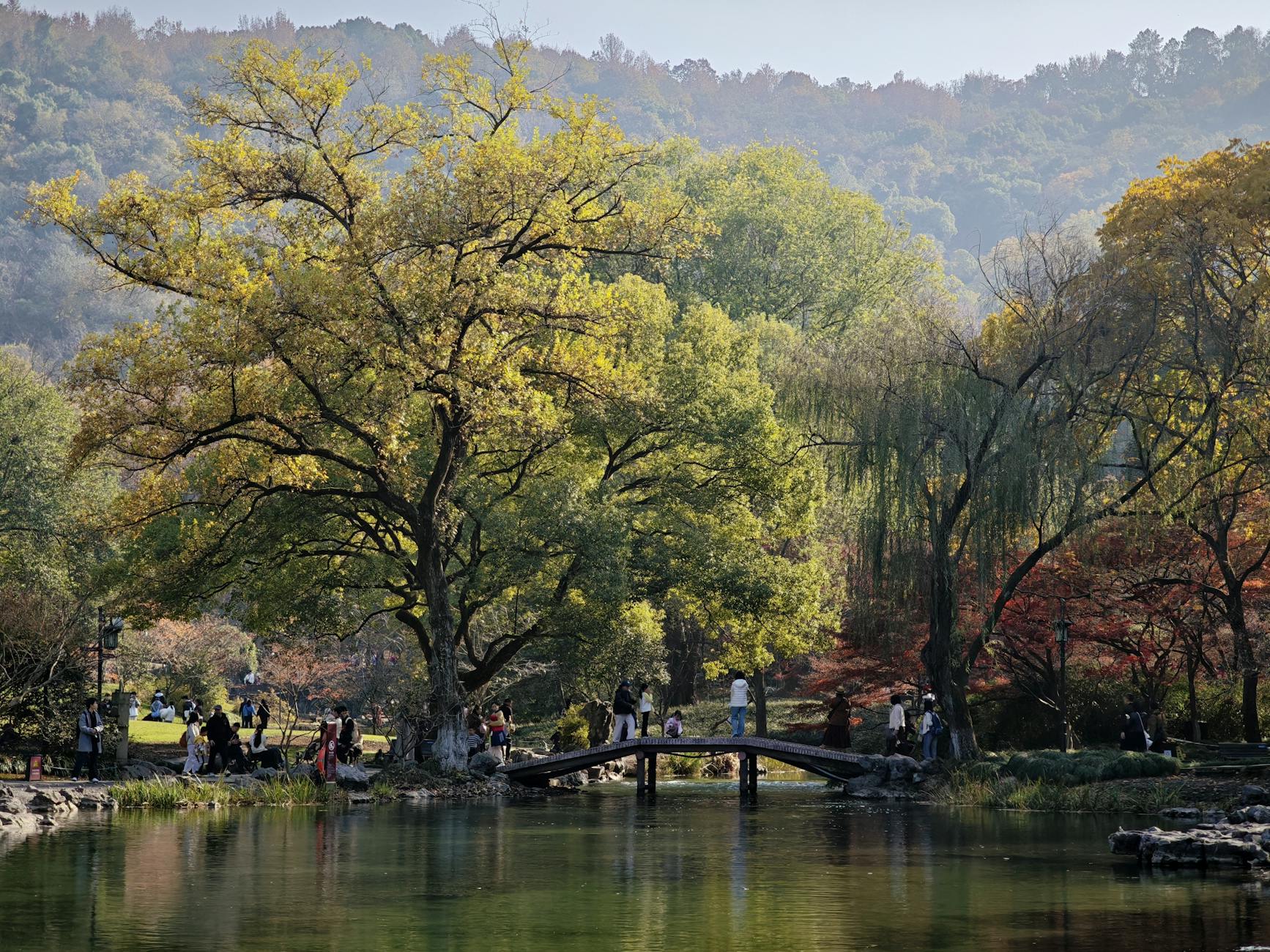
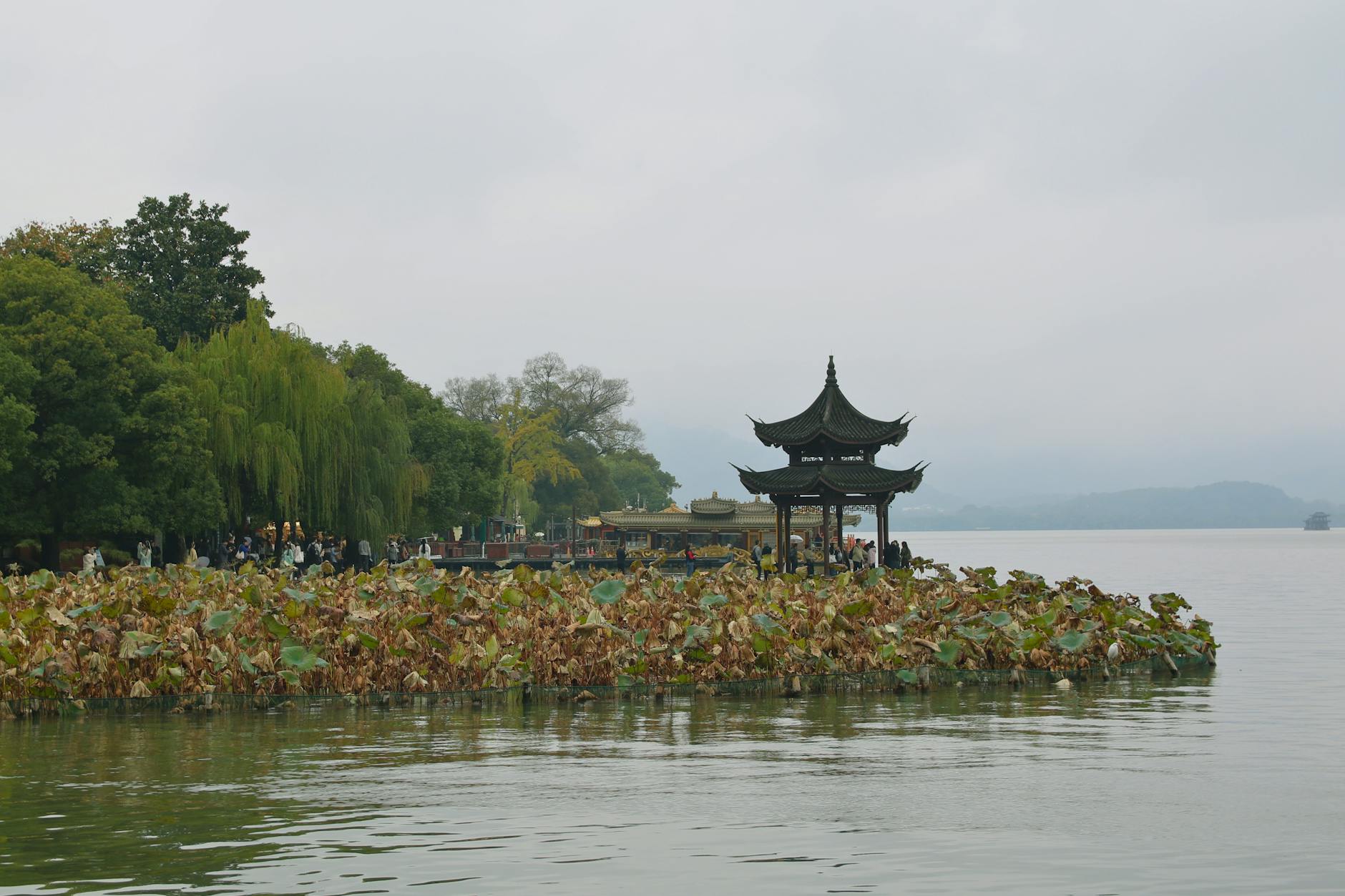
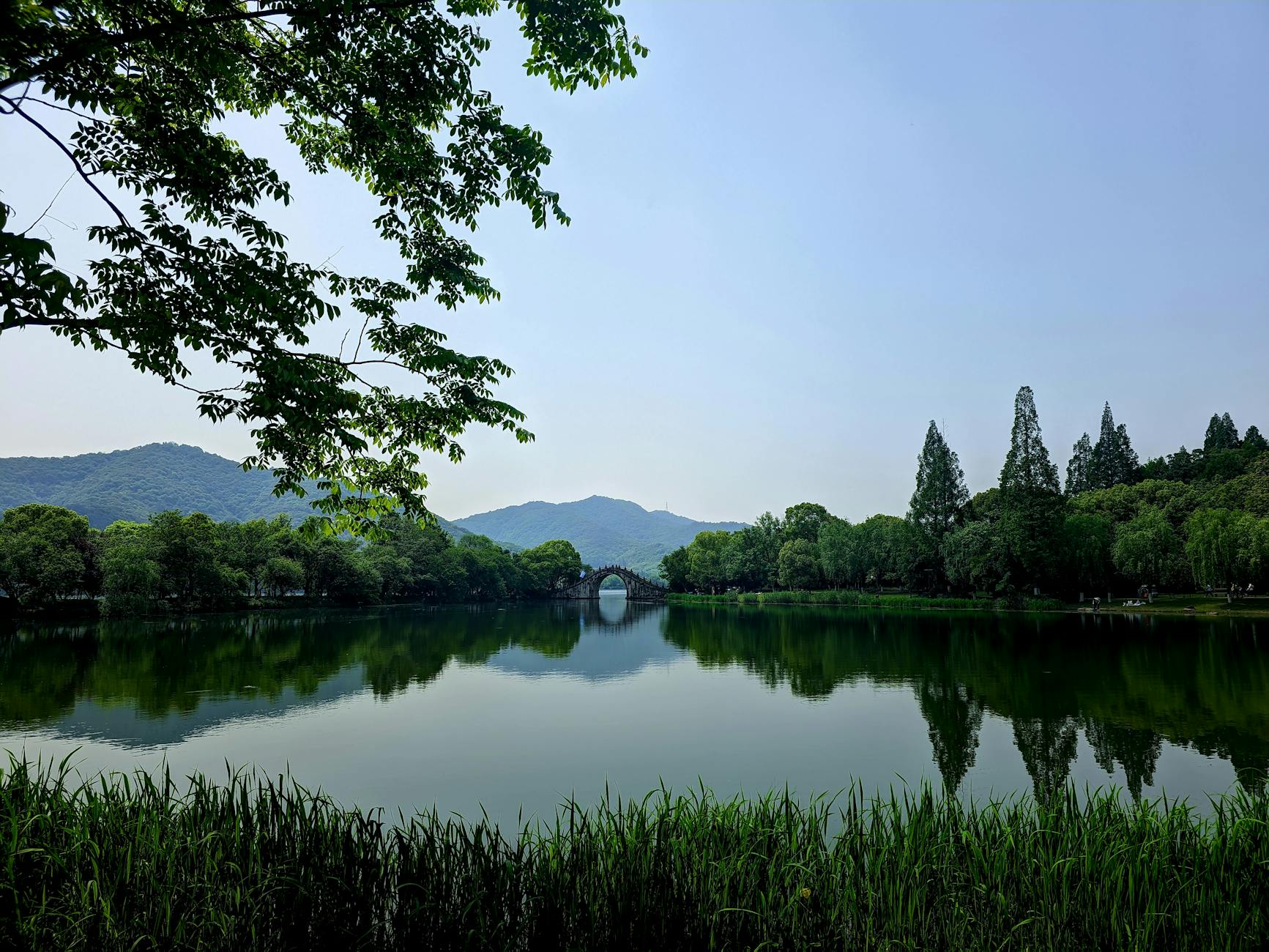
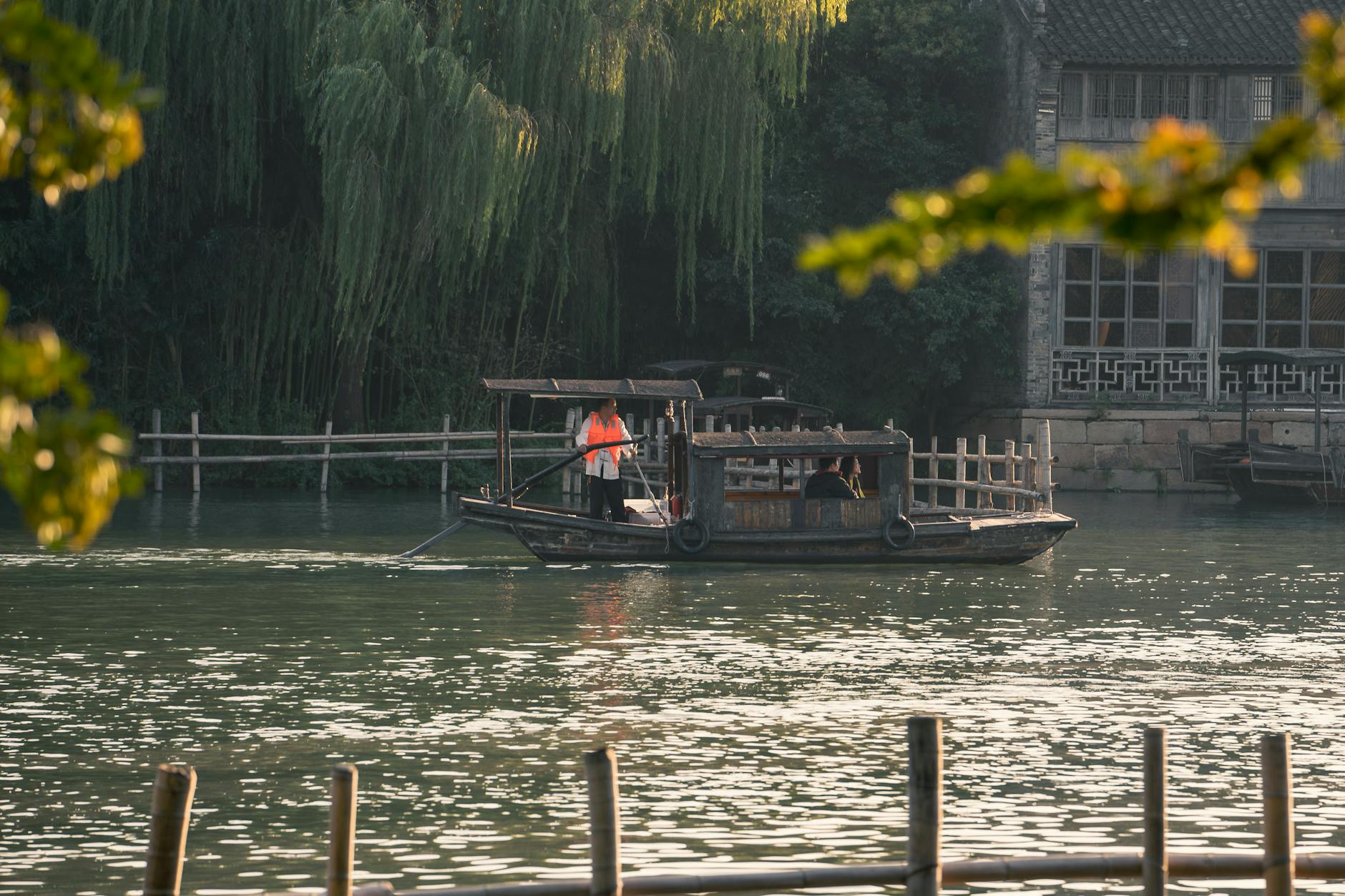
The Su Causeway (1089 CE) was built by Su Dongpo (the Tang poet + Hangzhou governor) using mud dredged from the lake to control flooding. The 2.8 km causeway is now lined with willow trees + peach trees (the famous ‘willow + peach’ interplanting) and has six humped stone bridges. Walkable end-to-end in 50 min, bike-able in 15. Best in early April when peach blossoms peak (the ‘Su Causeway in Spring Dawn’ UNESCO scene) or in autumn for osmanthus + maple. Free. Pairs naturally with the parallel Bai Causeway (1.2 km, on the north shore) — both lined with the famous tree-pattern.
Highlights
- Su Dongpo’s 1089 EngineeringBuilt using lake-dredged mud; flood control + scenic
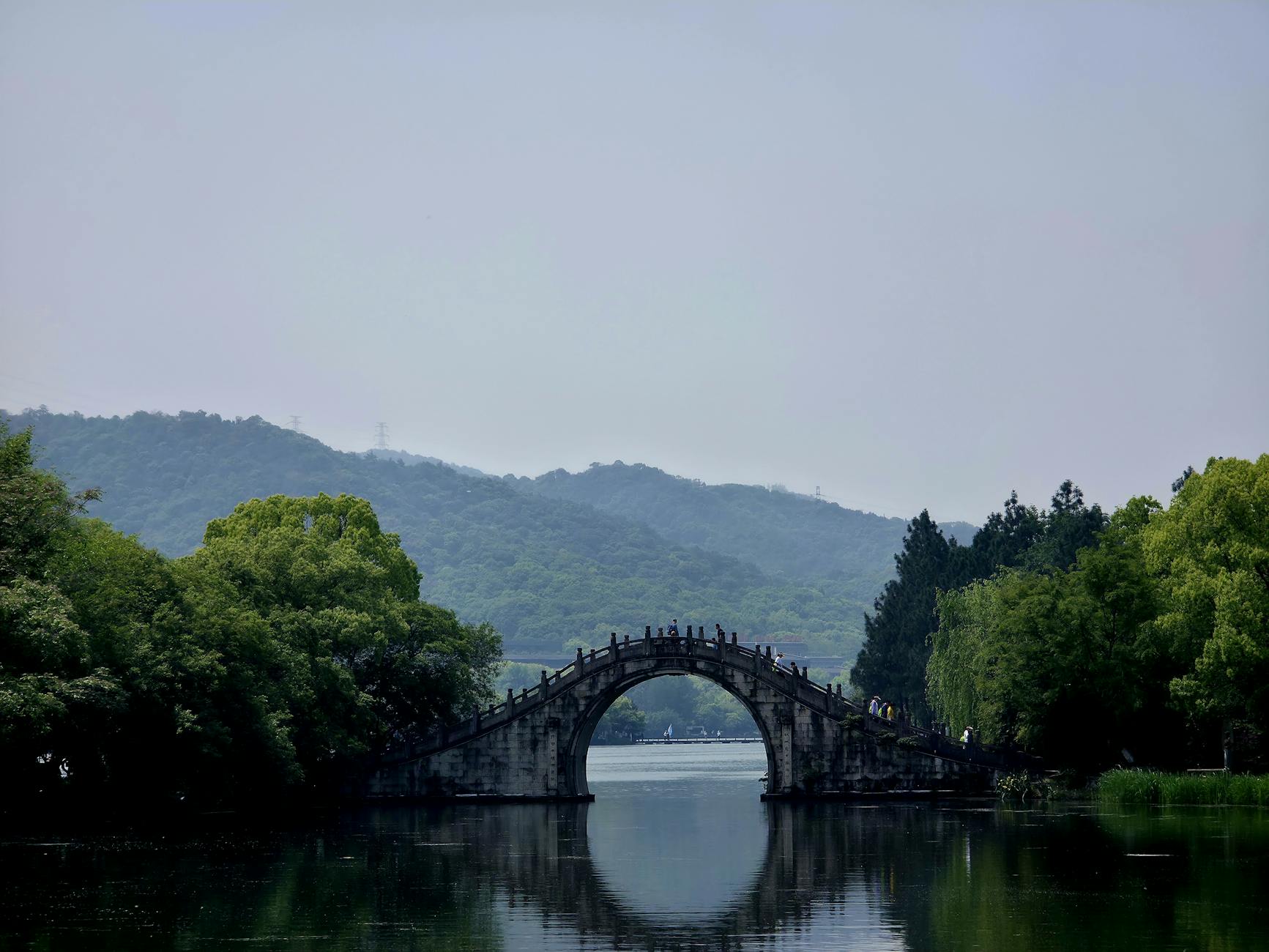
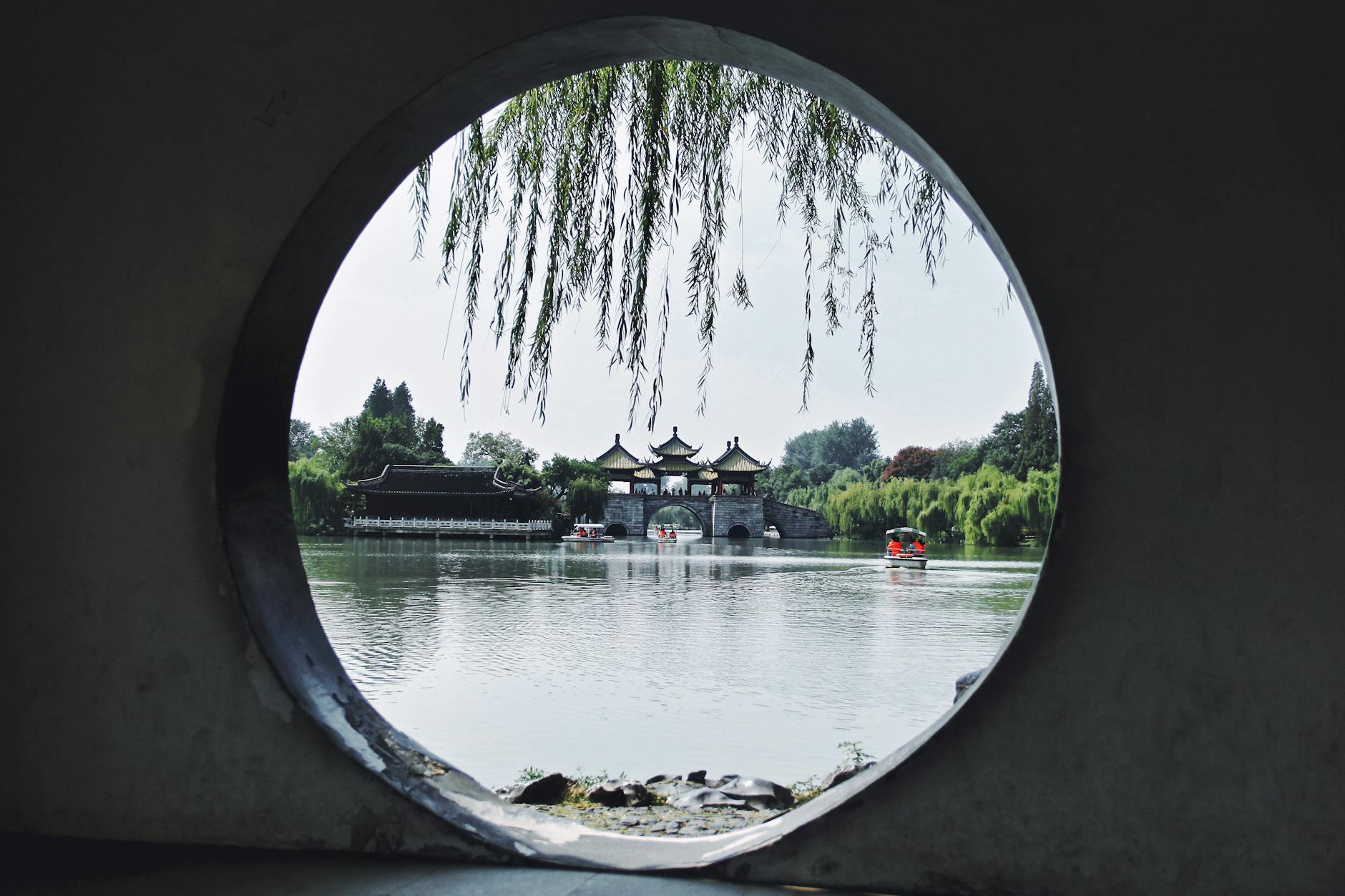
- Six Humped Stone BridgesEach ~60m apart; iconic willow-frame photos
What Chinese travelers actually do here
Distilled from Chinese-language travel notes — the practical tips most English guides miss.
- Walk it north to south in early morning; you face away from the sun and the willow-framed bridges glow without backlight.
- Rent a shared bike at either end if your legs are tired, but walking is how you actually catch the bridge-top lake views.
- The southern half near Huagang Park is quieter than the busy northern entrance opposite Yue Fei Temple.
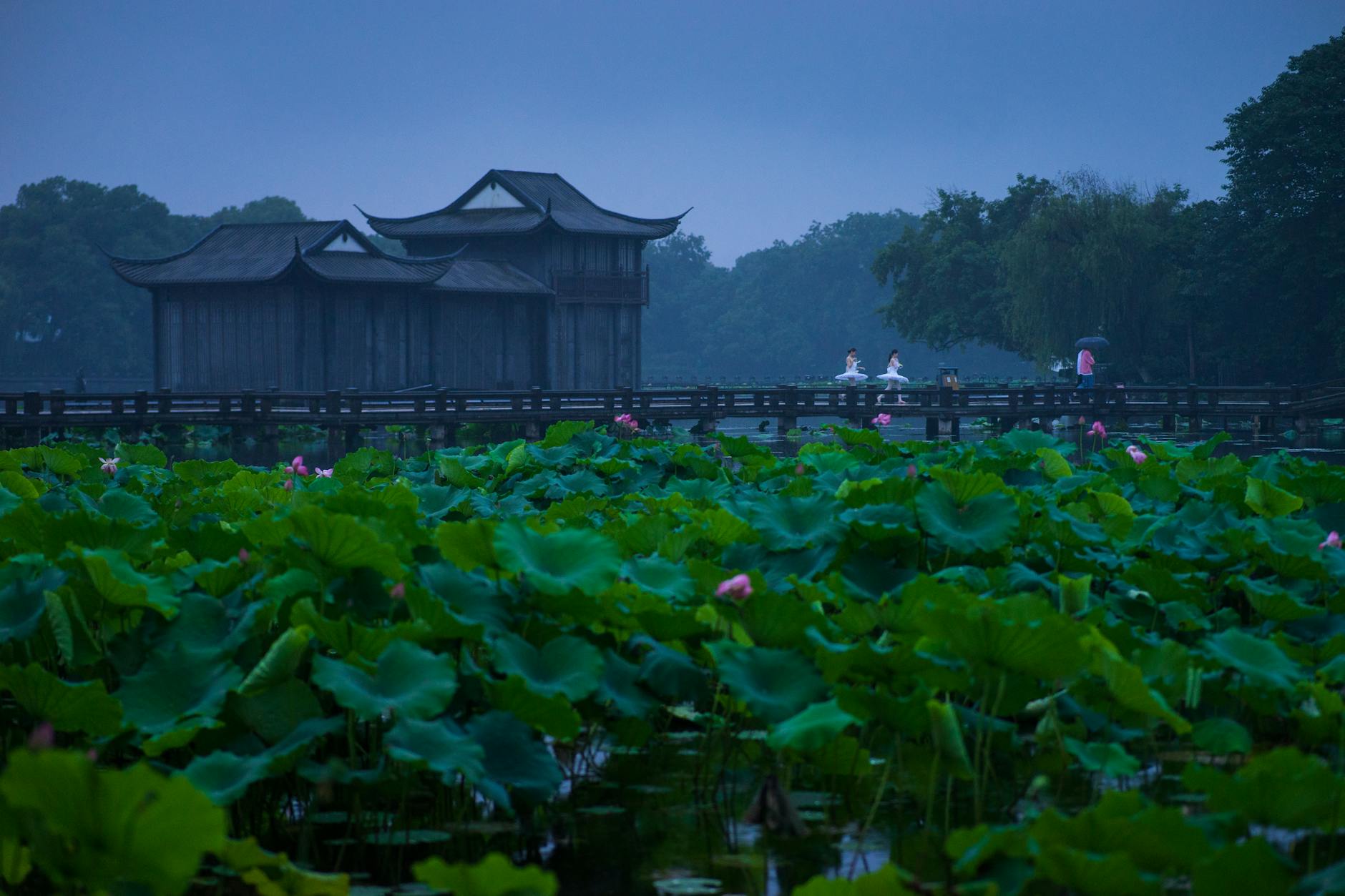
- Peach blossom in early April lasts barely two weeks; willows leaf out green by late March regardless.
- Each humped bridge sits about 60 metres apart; climb to the crest of any one for the cleanest reflection shot.
- Skip midday on weekends, when tour groups clog the path; a pre-breakfast walk feels almost private by comparison.
- Pair it with the shorter parallel Bai Causeway on the north shore to see both of the lake’s famous tree-lined dykes.
Photos
Show all 14 photosShow fewer
Frequently asked questions about Su Causeway
- How long does it take to walk the Su Causeway?
- The causeway runs about 2.8 km from end to end across West Lake. A relaxed walk takes around 50 minutes, while cycling covers it in roughly 15. You cross six humped stone bridges along the way, each giving a different framed view of the lake, so most people linger and budget closer to an hour and a half.
- Who built the Su Causeway and why?
- It was created in 1089 by Su Dongpo, the celebrated poet who also served as Hangzhou’s governor. He had mud dredged from the lake piled into a long dyke, both controlling flooding and creating a scenic walkway. The willow-and-peach planting you see today follows that original design, and the causeway carries his name.
- When is the most beautiful time to walk it?
- Early April is the highlight, when the peach trees bloom alongside the willows in the scene known as ‘Su Causeway in Spring Dawn’. September brings fragrant osmanthus and autumn colour. Early morning at any season is best, since the path is free, always open, and far quieter before the day-trip crowds arrive.
More in Hangzhou
Plan your Hangzhou trip
- Hangzhou vs Suzhou — Which Day Trip Should You Take from Shanghai?Itineraries · 8 min read
- China High-Speed Rail (Gaotie) — The 2026 Foreigner’s GuideTransit · 11 min read
- Does Google Maps Work in China? (No — Here’s What Does, 2026)Internet & Apps · 9 min read
- WeChat Pay for Foreigners — The 2026 Setup GuidePayments · 9 min read
- China Travel Insurance Requirements 2026 — What You Actually NeedVisa & Entry · 10 min read
- China Trip Pre-Departure Checklist — The 30-Day TimelineVisa & Entry · 10 min read
- 240-Hour Visa-Free Transit to China — 2026 GuideVisa & Entry · 11 min read