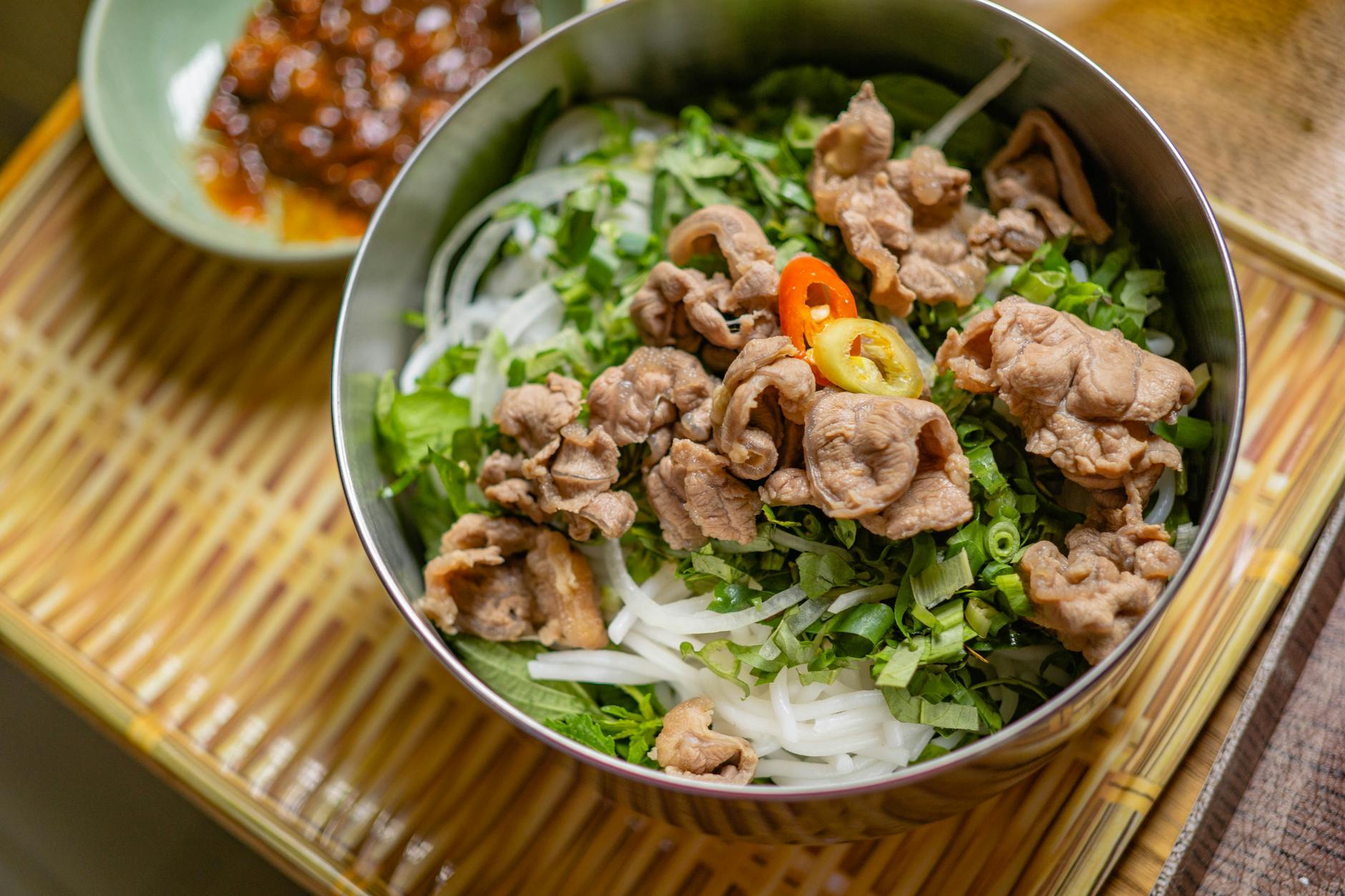
Guilin’s signature breakfast — rice noodles in brown beef gravy with self-serve pickle bar. ¥10-15 per bowl. Essential local food.
At a glance
- What it is
- Food
- Also known as
- 桂林米粉 (Guìlín Mǐfěn)
- Opening hours
- 5:30 AM – 2 PM
- Time needed
- 30 minutes
- Best time to visit
- Breakfast 6-10 AM at any branch
- Getting there
- Metro to the door
- English
- Some English signage
- Cards accepted
- Cash only
- Entry
- Walk-in — no booking
- Wi-Fi
- Free Wi-Fi
- Address
- Central Guilin — multiple branches · 桂林市中心 — 多家分店
Guilin Rice Noodles (Guilin Mifen) map & getting there
Taxi / DiDi? Show the driver: 桂林市中心 — 多家分店 · Central Guilin — multiple branches
Guilin rice noodles (Guilin Mifen, 桂林米粉) are the regional signature dish — flat rice noodles in a brown beef-gravy sauce (NOT a soup), topped with sliced beef, peanuts, scallions, and pickled vegetables. The ‘self-serve’ tradition: you receive a basic bowl, then walk to a pickle bar where you add chili oil, pickled radish, fermented tofu, sour beans, and condiments to taste. Local breakfast (open 5:30 AM - 12 PM at most shops), ¥10-15 per bowl. Best chains: Yiguang Restaurant (一光), Chongshan Mifen (崇善米粉), Old Guilin (老桂林米粉). NOT to be confused with Guilin ‘tang fen’ (汤粉) which is the soup version sold to foreigners — the dry brown-sauce version is the real local thing. Worth trying every morning of your Guilin stay.
Highlights
- Brown gravy, NOT soupReal Guilin mifen is dry-mix; soup version is for tourists
- Self-serve pickle barAdd chili oil + pickled radish + sour beans to taste
- ¥10-15 / bowlCheapest authentic breakfast in Guilin
- Open 5:30 AMReal local breakfast; tourist hours start at 8
What Chinese travelers actually do here
Distilled from Chinese-language travel notes — the practical tips most English guides miss.
- Real Guilin mifen breakfast hours are 5:30 - 10 AM. By 11 AM most chains switch to ‘lunch’ versions which are inferior. Tourist-area shops open 8-10 AM serving lunch versions all day.
- The self-serve pickle bar is mandatory — a basic bowl without pickles is incomplete. First-timer order: 1 spoon chili oil, 1 spoon pickled radish, 1/2 spoon sour beans, sprinkle of scallions. Adjust on subsequent bowls.
- Each branch has different brown-gravy recipes — Yiguang’s is rich + meaty, Chongshan’s is lighter + more umami, Old Guilin’s is sweeter. Try 2-3 chains in your stay if you can.
- The ‘horse meat mifen’ (马肉米粉) is a regional specialty at certain chains — actual horse meat (legal in China). Worth trying if you’re adventurous; tastes like sweet beef. ¥18-25/bowl.
- Eat mifen for BREAKFAST not lunch. Guilin locals view it as breakfast food (like Cantonese congee or Northern jianbing) — eating mifen for dinner marks you as a tourist. Order ngih-yu (鲜虾) shrimp dumplings for lunch instead.
- Don’t order a side of soup with mifen — they’re separate categories. Order Hu Hong Tang (糊红汤) sweet rice wine soup as dessert AFTER if you want something liquid.
Photos
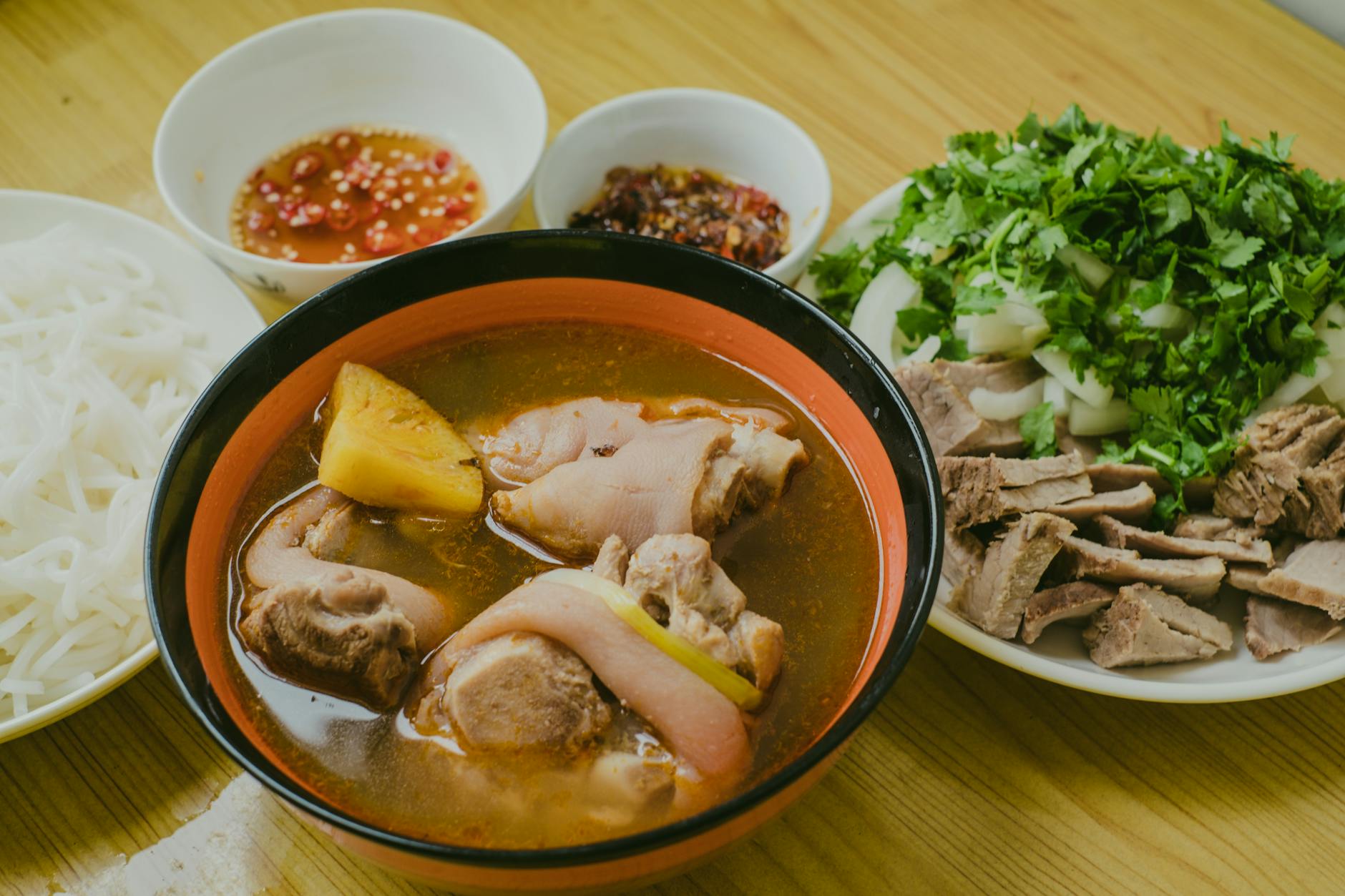
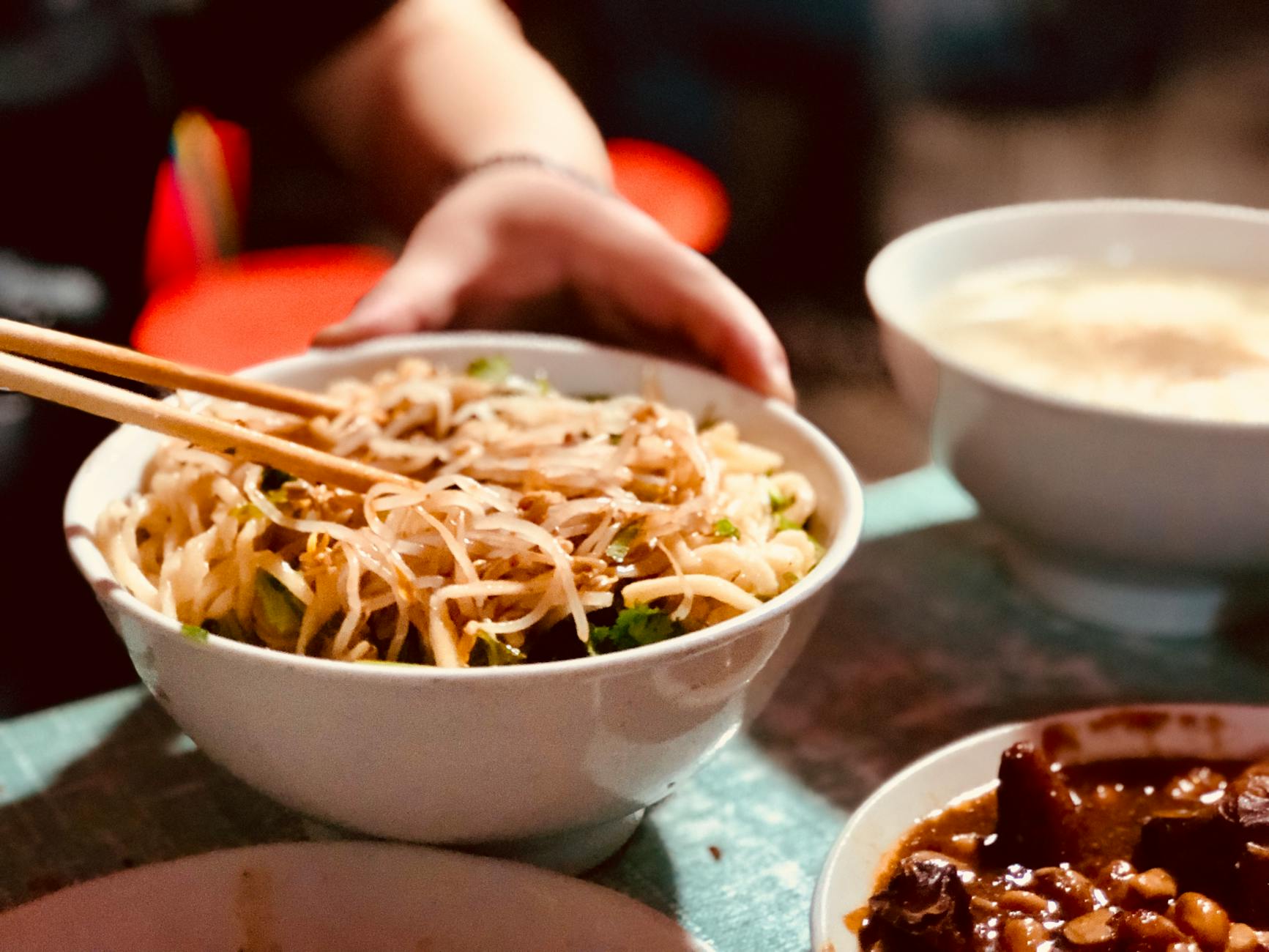
Watch creators visit Guilin Rice Noodles (Guilin Mifen)
Each clip is timestamped to the moment the creator arrives at this stop.
3 Days Exploring Guilin China: Karst Landscapes, Li River Cruise, Guilin rice noodles
Clement Ying - Travel DiariesStarts at 8:53
Guilin Rice Noodles (桂林米粉)
Videos


Frequently asked questions about Guilin Rice Noodles (Guilin Mifen)
- What’s the difference between Guilin Mifen and pho or other rice noodles?
- Guilin mifen is DRY (no soup) — flat rice noodles tossed with brown beef-and-tendon gravy, then topped with peanuts, scallions, and a SELF-SERVE pickle bar where you add chili oil, pickled radish, sour beans, and fermented tofu. Vietnamese pho is soup-based. Sichuan dandan noodles use sesame paste. Beijing zha jiang noodles use fermented bean. Guilin mifen’s signature is the brown-gravy + self-serve pickle combo, found nowhere else in China.
- Where’s the most authentic place to try it?
- Three chains for real-deal Guilin mifen: (1) **Yiguang Restaurant 一光** (multiple branches, oldest brand since 1992, locals’ favorite), (2) **Chongshan Mifen 崇善米粉** (slightly more upscale, ¥12-18/bowl), (3) **Old Guilin 老桂林米粉** (tourist-friendly with English menu). Avoid the rice noodle shops that ADVERTISE in English on West Street Yangshuo or Pingjiang Road — those are tourist-priced soup versions, not authentic.
- How spicy is it?
- BASE bowl is not spicy — the gravy is sweet-savory, almost like brown gravy from a pot roast. YOU control spice from the self-serve pickle bar. Add one spoon of red chili oil for medium, two spoons for hot, three for native-Guilin-spicy. The pickled radish and sour beans are non-spicy but add tang.
- Vegetarian options?
- Limited but possible. The base gravy contains beef stock and beef chunks. Ask for ‘素米粉’ (su mifen, vegetarian noodles) — gives you noodles + plain gravy + the full pickle bar. Some chains refuse if too busy; Chongshan Mifen is the most reliable for vegetarian. Vegans should clarify also no beef stock.
More in Guilin




Plan your Guilin trip
- Guilin vs Zhangjiajie — Which Karst Landscape Should You Pick?Itineraries · 8 min read
- China High-Speed Rail (Gaotie) — The 2026 Foreigner’s GuideTransit · 11 min read
- Does Google Maps Work in China? (No — Here’s What Does, 2026)Internet & Apps · 9 min read
- WeChat Pay for Foreigners — The 2026 Setup GuidePayments · 9 min read
- 240-Hour Visa-Free Transit to China — 2026 GuideVisa & Entry · 11 min read
- How to Use Alipay as a Foreigner in China — 2026 GuidePayments · 11 min read
- Do You Need a VPN for China? Legality, Setup Before You Fly, and What Breaks (2026)Internet & Apps · 13 min read